Ka mutu te huaview
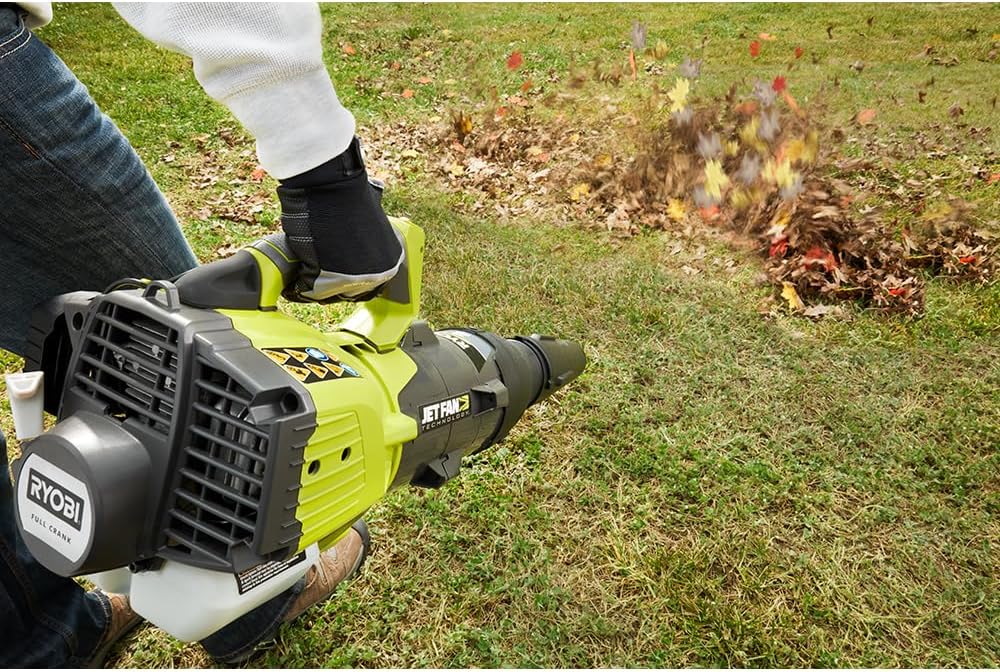
The RYOBI 25cc Gas Jet Fan Blower is a powerful handheld tool designed for efficient clearing of leaves, grass, and debris. It features a 2-cycle engine, jet fan design, variable speed trigger, and cruise control for optimal performance and user comfort.
- Mihini: 25cc Gas, 2-Cycle
- Tere Rererangi: Tae atu ki te 160 MPH
- Rōrahi rangi: 520 CFM
- Āhuatanga: Jet Fan Design, Variable Speed Trigger, 3-Position Cruise Control, Anti-Vibe Handle
- Tauwehe Puka: Pupuri ringa
Tatūnga me te Runanga
Te Wetewete me te Tirotiro Tuatahi
Carefully remove all components from the packaging. Inspect for any damage. Ensure all parts listed in the packing list are present.
Nga Tohutohu Huihuinga
- Attach Blower Tubes: The blower tube typically comes in multiple sections. Align the sections and push them together until they securely click into place. Some models may use clips or screws for additional security.
- Install Control Handle (if applicable): If your model includes a separate control handle for the blower tube, attach it to the designated slot on the tube. Ensure it is firmly secured and allows for comfortable operation.
- Connect Flexible Hose (if applicable): For models with a flexible hose connecting the engine unit to the blower tube, attach the hose securely to both ends using the provided clamps.
Te Whakarite Wahine
This RYOBI blower uses a 2-cycle engine and requires a specific gasoline-to-oil mixture. Refer to the fuel tank cap or the engine label for the exact ratio. A common ratio for 25cc 2-cycle engines is 25:1 or 40:1. Always use fresh, unleaded gasoline with an octane rating of 89 or higher and a high-quality 2-cycle engine oil.
- Mix the gasoline and 2-cycle oil in a separate, approved fuel container.
- Ruperupea rawatia te ipu kia pai ai te whakaranu.
- Do not mix fuel directly in the blower's fuel tank.
Fueling the Blower
- Whakanohoia te pupuhi ki runga i te mata taumata.
- Horoia te rohe huri noa i te taupoki wahie kia kore ai te paru e uru ki roto i te tāke.
- Ata tango i te potae wahie.
- Pour the prepared fuel mixture into the fuel tank using a funnel to avoid spills.
- Do not overfill. Leave space for fuel expansion.
- Whakakapihia te potae wahie.
Nga Tohutohu Whakahaere
Starting the Engine (Cold Start)
- Whakakīia te Mīhini: Press the primer bulb 10 times until fuel is visible in the return line.
- Tautuhi Ārai: Nekehia te reihi whakakowaowao ki te tūnga KATI.
- Set Speed Control: Push the speed control lever all the way forward.
- Pull Starter Rope: Place the blower on a flat, stable surface. Hold the blower firmly with one hand and pull the starter rope until the engine attempts to start (you may hear a puff noise). Do not pull more than 3 times.
- Whakatikatika i te Ārai: Move the choke lever to the MIDDLE position.
- Restart Engine: Pull the starter rope again until the engine fully starts and runs.
- Whakawera: Let the engine run for approximately 10-30 seconds.
- Te Ārai Tuwhera: While fully squeezing and holding the trigger, move the choke lever to the OPEN or OFF position.
- Final Warm-up: Allow the engine to run for an additional 1 minute to fully warm up before use.
Te whakamahi i te Kaipupuri
- Rere Keu Keu: Control the air speed by adjusting the pressure on the trigger.
- Mana Whakatere: Engage the 3-position cruise control for continuous operation at a desired speed without holding the trigger.
- Anti-Vibe Handle: The anti-vibration handle with overmolded grips is designed for optimized user comfort during extended use.
Te tiaki
Tirowhai auau
- Tātari hau: Regularly inspect and clean the air filter to ensure proper engine performance and prevent overheating. Replace if damaged.
- Puru korakora: Check the spark plug periodically for wear and carbon buildup. Clean or replace as needed to ensure easy starting and efficient combustion.
- Ngā Raina Wahie: Inspect fuel lines for cracks or leaks. Replace any damaged lines immediately.
- Whakapai Whānui: Keep the blower's air intake and exterior free of debris to maintain optimal airflow and prevent engine strain.
Rokiroki
- For long-term storage, drain all fuel from the tank and run the engine until it stops to clear the carburetor.
- Horoihia te pupuhi i mua i te rongoa.
- Whakaorangia ki tetahi waahi maroke, pai te hau, kia matara atu i te ra tika me te wera nui.
Raparongoā
| Raruraru | Take pea | Rongoā |
|---|---|---|
| E kore e timata te miihini | Karekau he wahie, he ranunga wahie hē ranei | Fill tank with correct 2-cycle fuel mixture. |
| Spark plug fouled or wet | Whakapaihia, whakakapihia ranei te rama rama. | |
| Karekau i tika te whakarite | Follow cold start procedure. | |
| Te ngaro o te mana | Tātari hau kapo | Horoi, whakakapi ranei i te tātari hau. |
| Te wahie tawhito, kua mate ranei | Drain old fuel and refill with fresh mixture. |
Whakatakotoranga
- Waitohu: RYOBI
- Tauira: HAWA
- Huringa Miihini: 25cc
- Momo Mihini: Hauhanga-2-Hurihanga
- Tere Rererangi Max: 160 MPH
- Rōrahi Air Max: 520 CFM
- Puna Hiko: Te Mahi Hau
- Tauwehe Puka: Pupuri ringa
- Nga waahanga motuhake: Jet Fan Design, Variable Speed Trigger, 3-Position Cruise Control, Anti-Vibe Handle
- UPC: 659821583744
Hua Media
Whakaahua Hua


Ataata Hua Whaimana
Pūtāhui me te Tautoko
For warranty information, technical support, or to order replacement parts, please refer to the official RYOBI website or contact customer service directly. Keep your purchase receipt as proof of purchase.
- Ratonga Kiritaki: Tirohia te takai o tō hua, te paetukutuku mana rānei a RYOBI webpae mo nga korero whakapiri.
- Rauemi ipurangi: Visit the RYOBI website for additional manuals, FAQs, and product registration.


