1. Kupu Whakataki
This user manual provides essential information for the installation, operation, and maintenance of the Coolmay MX3G-32MRT PLC Module. This Programmable Logic Controller (PLC) module is designed for industrial automation applications, offering reliable control and data processing capabilities. It features 16 digital inputs, 16 transistor sink outputs, and 2 analog inputs, making it suitable for a wide range of control tasks.
2. Nga korero haumaru
Kia mau tonu ki nga whakaritenga haumaru e whai ake nei hei aukati i te whara me te kino o nga taputapu:
- Me whakarite kia momotu te hiko katoa i mua i te tāutanga, te waea, te tiaki rānei.
- Me mahi anake te tāutanga me te waea e ngā kaimahi whai tohu.
- Proper grounding is essential to prevent electrical shock and ensure stable operation.
- Kaua e whakahaerehia te waeine i roto i ngā taiao e neke atu ana i tōna rohe pāmahana, haumākū, wiri rānei kua tohua.
- Avoid exposing the module to direct sunlight, corrosive gases, or excessive dust.
3. Hua Neke Atuview
The Coolmay MX3G-32MRT PLC Module is a compact and robust industrial control device. It integrates various components for seamless operation within an automation system.
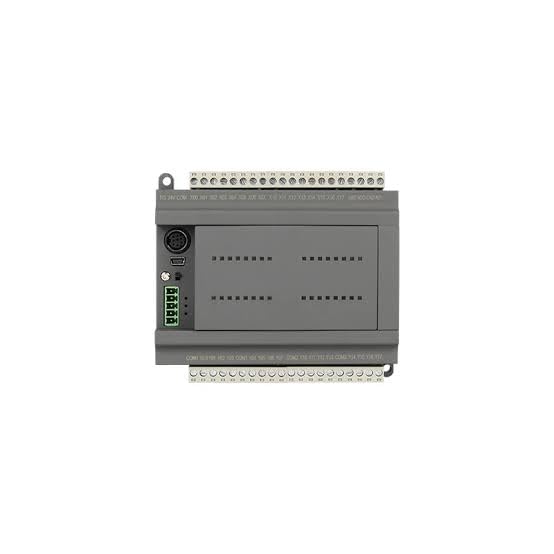
Whakaahua 3.1: Runga View of MX3G-32MRT PLC Module. This image displays the top-down perspective of the PLC module, highlighting the clearly labeled input and output terminal blocks at the top and bottom. Various communication ports, including a USB port, are visible on the left side, along with status indicator LEDs.
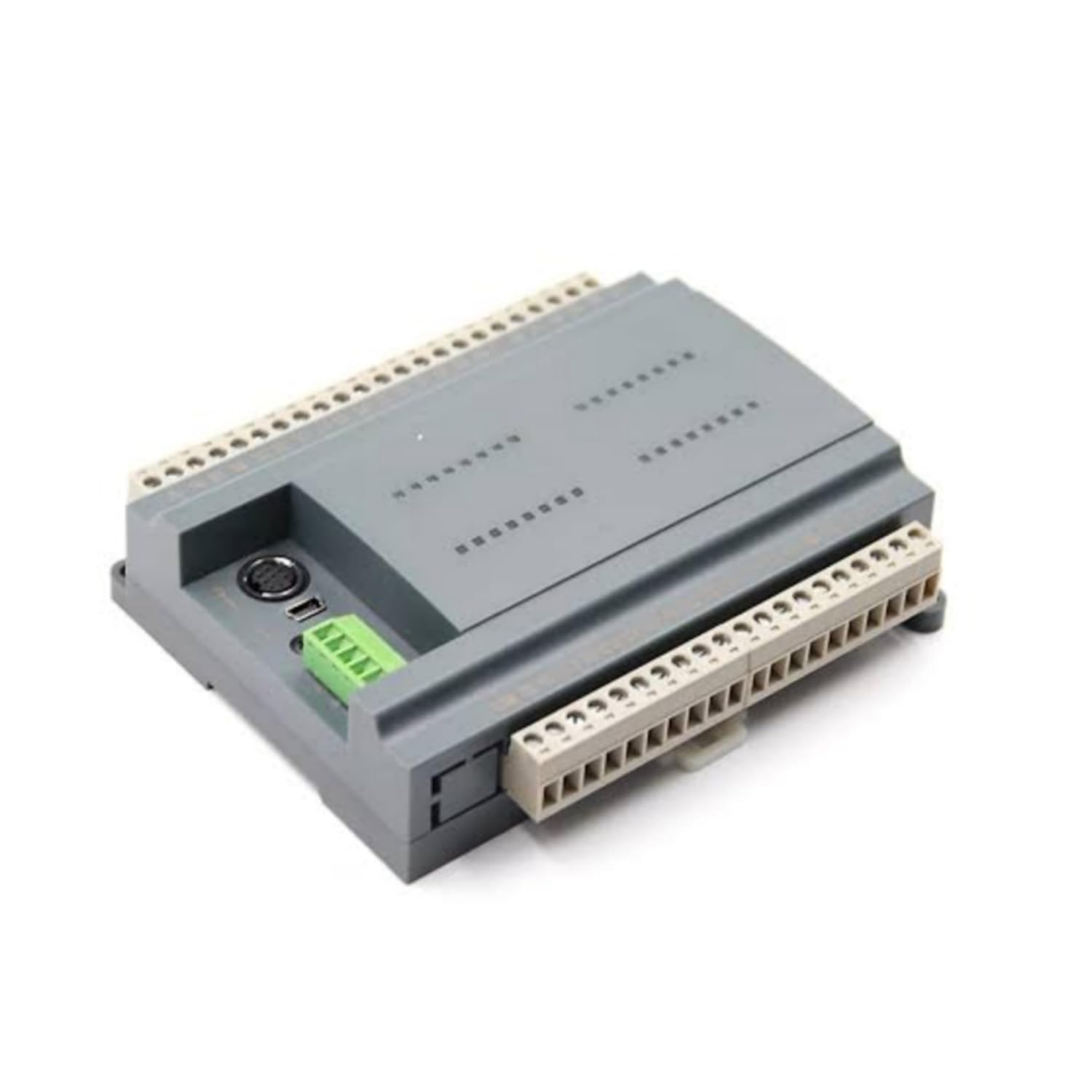
Whakaahua 3.2: Koki View of MX3G-32MRT PLC Module. He koki tenei ahua view of the PLC module, showcasing its compact and sturdy grey casing. The perspective allows for a better understanding of its overall dimensions and the arrangement of its side-mounted connectors and terminal blocks.
Wae matua:
- Digital Input Terminals: For connecting sensors and switches.
- Transistor Sink Output Terminals: For controlling actuators and indicators.
- Analog Input Terminals: For connecting analog sensors.
- Whakauru Hiko: Mo te hono i te hiko DC.
- Tauranga Whakawhitiwhiti: For programming and data exchange with other devices.
- Tohu Mana: LEDs to show power, run, and error status.
4. Tatūnga
4.1. Whakapiki
The MX3G-32MRT module is designed for DIN rail mounting. Securely attach the module to a standard DIN rail in a control cabinet, ensuring adequate ventilation space around the unit.
4.2. Waaho
Follow these general guidelines for wiring the PLC module:
- Tuku Hiko: Connect a stable DC power supply to the designated power input terminals. Observe correct polarity.
- Whakauru Mamati: Connect your digital input devices (e.g., push buttons, limit switches) to the digital input terminals. Refer to the module's specific wiring diagram for input type (sink/source) compatibility.
- Transistor Sink Outputs: Connect your output devices (e.g., relays, indicator lights) to the transistor sink output terminals. Ensure the load current does not exceed the specified maximum for each output.
- Tāuru tairitenga: Connect analog sensors (e.g., temperature, pressure) to the analog input terminals. Ensure proper signal type and range matching.
- Whakapapa: Connect the module's ground terminal to a reliable earth ground.
4.3. Hononga Tuatahi
Connect the PLC module to a computer using a compatible programming cable via the designated communication port. Install the necessary drivers and programming software on your computer.
5. Nga Tohutohu Whakahaere
5.1. Kei te Hiko Nei
After completing all wiring and connections, apply power to the PLC module. The power indicator LED should illuminate, indicating successful power-up.
5.2. Papatonotanga
Use the compatible programming software to develop and download your control logic program to the PLC. The software provides an environment for creating ladder logic, function block diagrams, or other programming languages supported by the module.
5.3. Aratau Whakahaere
Once the program is downloaded, switch the PLC to RUN mode (either via software or a physical switch if available). The PLC will then execute the loaded program, controlling the connected inputs and outputs according to the logic.
5.4. Aroturuki
The programming software allows for real-time monitoring of input/output status, internal registers, and program execution. This is crucial for debugging and verifying system operation.
6. Tiaki
Regular maintenance ensures the longevity and reliable operation of your PLC module:
- Te horoi: Periodically clean the module and its surroundings to prevent dust accumulation, which can lead to overheating or short circuits. Use a soft, dry cloth. Do not use solvents.
- Mana Taiao: Me whakarite kia noho tonu te taiao whakahaere i roto i nga awhe pāmahana me te haumākū kua tohua.
- Taki Hononga: Tirohia ngā hononga waea katoa i ia wā, mō te piripono me ngā tohu o te waikura, te pakaru rānei.
- Whakahōu Firmware: Check the Coolmay official website for any available firmware updates that may improve performance or add new features. Follow the provided instructions carefully for any update procedures.
7. Te Raru
If you encounter issues with your MX3G-32MRT PLC Module, refer to the following common problems and solutions:
| Raruraru | Take pea | Rongoā |
|---|---|---|
| PLC does not power on. | Karekau he hiko; waea hē; te tuku hiko hapa. | Tirohia nga hononga hiko me te voltage; verify power supply functionality. |
| Ko nga whakaurunga kaore i te whakautu. | Incorrect wiring; faulty sensor; program logic error. | Verify input wiring; test sensor functionality; check program logic. |
| Ko nga putanga kaore i te hohe. | Incorrect wiring; faulty actuator; program logic error; overloaded output. | Verify output wiring; test actuator; check program logic; ensure load is within specifications. |
| Communication error with PC. | Incorrect cable; driver issue; wrong communication settings. | Ensure correct cable is used; reinstall drivers; verify communication parameters in software. |
| PLC in ERROR state (Error LED on). | Program error; hardware fault. | Check error codes in programming software; review program for errors; contact support if hardware fault suspected. |
If the problem persists after attempting these solutions, contact Coolmay customer support for further assistance.
8. Whakatakotoranga
| Huanga | Taipitopito |
|---|---|
| Waitohu | Coolmay |
| Tau tauira | MX3G-32MRT |
| Kaihanga | Shenzhen Coolmay Technology Co., Ltd |
| Whenua Taketake | Haina |
| Whakauru Mamati | 16 |
| Nga Putanga Mamati | 16 (Transistor Sink Type) |
| Nga Input Pouakauru | 2 |
| Te maha o nga Rakau Mahara | 1 |
| ASIN | B0D69LG89H |
| Te Ra Wātea Tuatahi | 6 Pipiri 2024 |
9. Pūtāhui me te Tautoko
For warranty information, please refer to the documentation provided with your purchase or contact your vendor. Coolmay products are designed for reliability, and customer satisfaction is a priority.
For technical support, troubleshooting assistance, or inquiries regarding the Coolmay MX3G-32MRT PLC Module, please visit the official Coolmay website or contact their customer service department. Ensure you have your product model number and any relevant purchase details ready when seeking support.