1. Kupu Whakataki
The Gustard H26 is a high-performance, fully balanced discrete Class A headphone amplifier designed to deliver exceptional audio fidelity. It incorporates advanced features and robust construction to provide a superior listening experience for audiophiles.
Āhuatanga matua:
- Fully balanced discrete Class A amplifier with 8 pairs of power tubes for powerful and controlled sound.
- Seamless switching of preamplifier output, allowing the device to function as a pure pre-stage whakaputanga.
- Tuhinga o muatage utilizes two direct-insert LME49720 dual op-amps.
- Matrix relay volume control for consistent and unbiased 4-way volume accuracy.
- Equipped with two custom 50W audio-specific toroidal transformers, one for each channel, ensuring minimal interference.
- Fully balanced input stage, enhancing clarity and richness for both balanced and single-ended RCA inputs.
2. Nga korero haumaru
Please read and follow these safety guidelines to ensure safe operation and to prevent damage to the device or injury to yourself.
- Kaua e tukuna te waeine ki te ua, te makuku, te wera nui ranei.
- Me whakarite kia tika te hau huri noa i te amphe whakamahana hei aukati i te werawera.
- Kaua e whakatuwheratia te casing; tirohia nga ratonga katoa ki nga kaimahi whai tohu.
- Whakamahia anake te urutau hiko me ngā taura kua tohua.
- Momotuhia te hiko i mua i te horoinga, i te nukunga rānei i te waeine.
3. Ihirangi mokete
Manatokona kei roto katoa nga mea kei roto i te kete:
- Gustard H26 Headphone Ampkaikawe
- Waea hiko
- Mana Mamao
- Pukapuka Kaiwhakamahi (tenei tuhinga)
4. Hua Neke Atuview
4.1 Paewhiri Mua
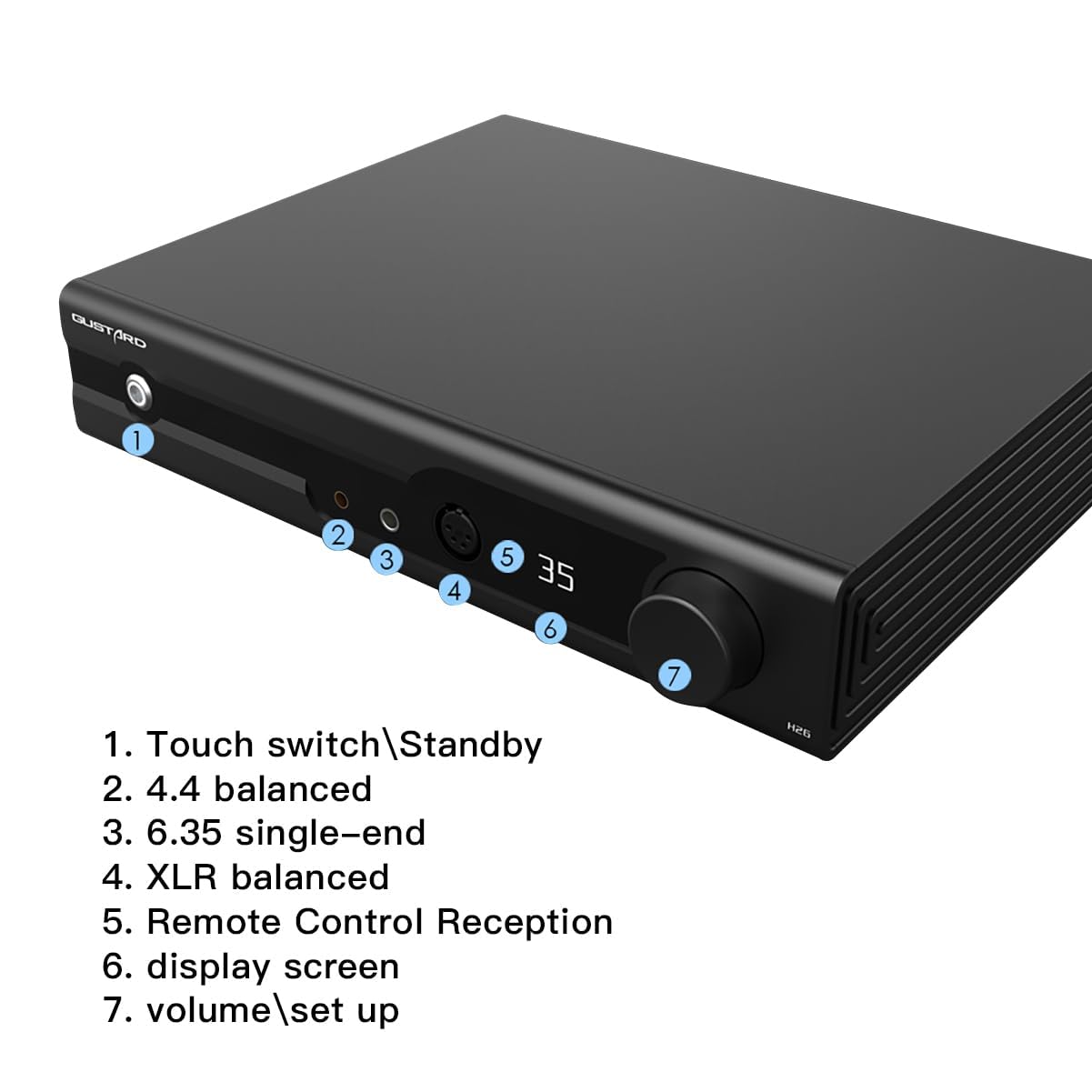
The front panel provides access to essential controls and headphone outputs.
- Touch Switch/Standby: Power on/off or place the unit in standby mode.
- 4.4 Balanced Output: Headphone output for 4.4mm balanced connectors.
- 6.35 Single-End Output: Headphone output for 6.35mm single-ended connectors.
- XLR Putanga Taurite: Headphone output for 4-Pin XLR balanced connectors.
- Remote Control Reception: Kaiwhiwhi Infrared mo te mana mamao.
- Whakaatu Mata: Shows current settings such as volume, input, and gain.
- Volume/Setup Knob: Adjusts volume and navigates setup menus.
4.2 Paewhiri Whakamuri

The rear panel houses all input and output connections, along with power controls.
- Balanced Input XLR 1 & 2 (Left/Right): For balanced audio sources.
- Single Input RCA (Left/Right): For single-ended audio sources.
- Preamp Output XLR (Left/Right): Taurite muaampputanga lifier.
- Preamp Output RCA (Left/Right): Kotahi-mutunga muaampputanga lifier.
- Voltage Kōwhiringa: Switch to select appropriate input voltage (e.g., 115V/230V).
- Whakauru Hiko AC: Connect the power cord here.
- Whakawhiti Kaha: Te whakawhiti mana matua mō te waeine.
- Momonga Replaceable fuse for electrical protection.
4.3 Nga Wae o Roto
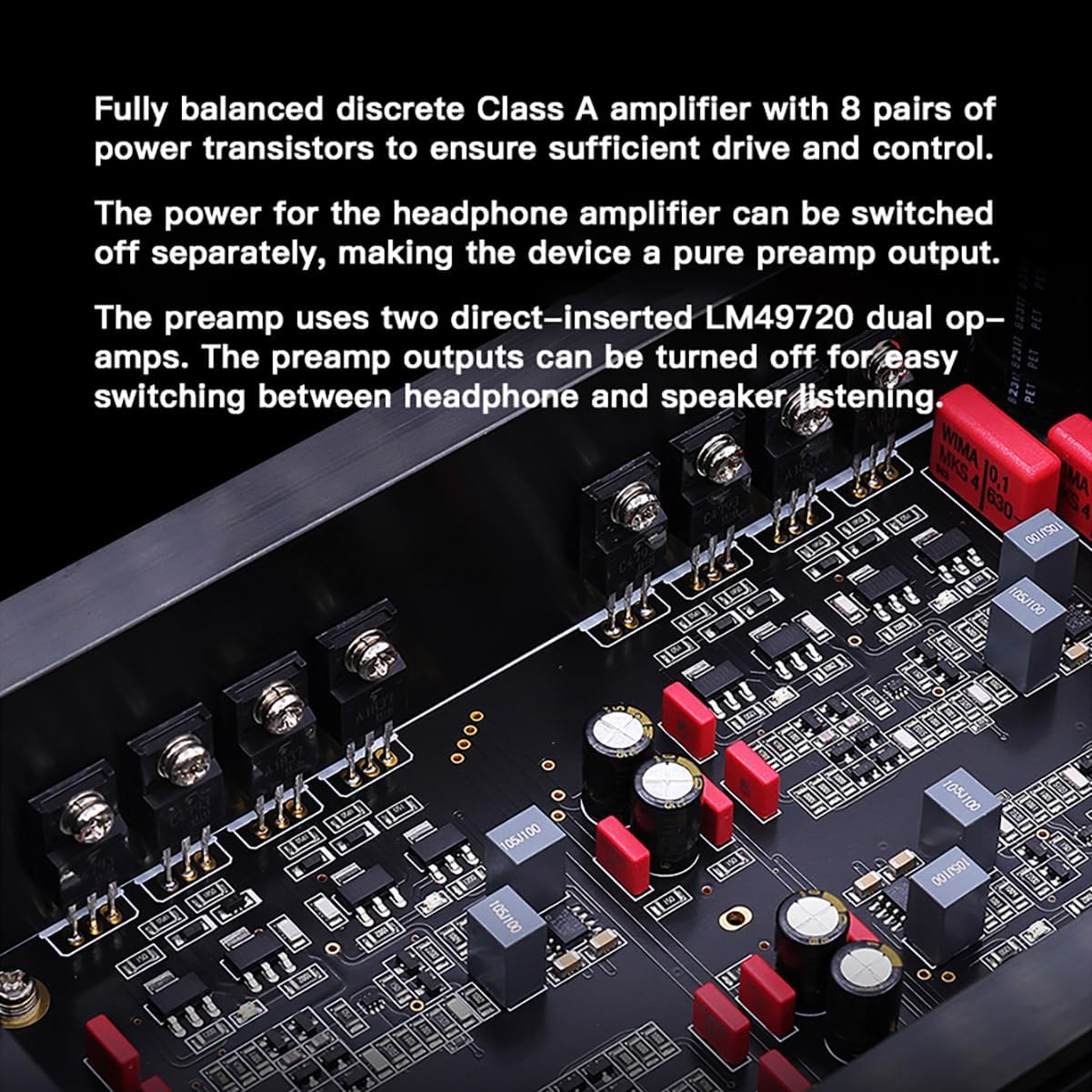
The Gustard H26 features a fully balanced discrete Class A amplifier design, utilizing 8 pairs of power transistors to ensure robust driving capability and precise control. The use of discrete components allows for fine-tuning of each stage, optimizing performance. The pre-stage incorporates two LME49720 dual op-amps.
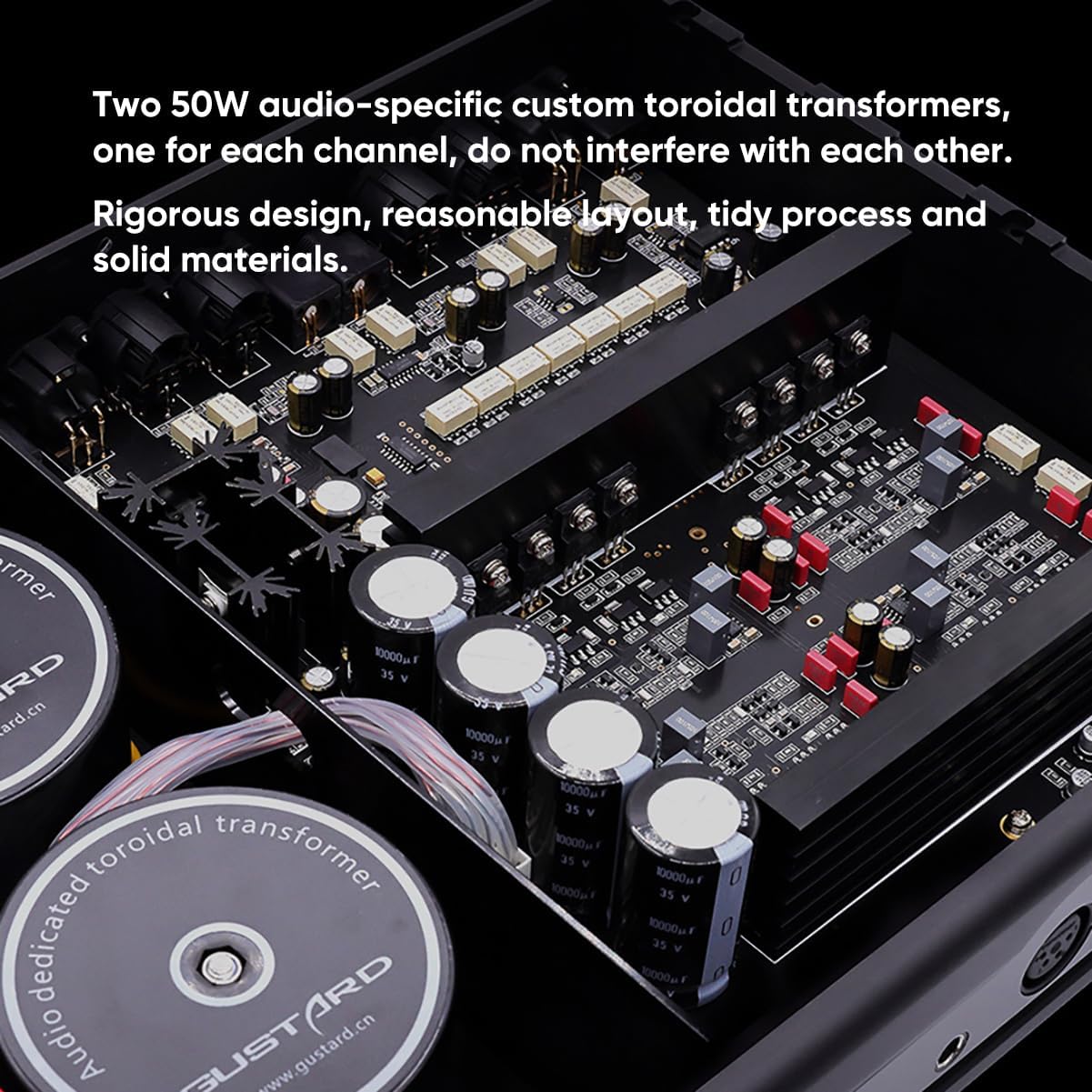
The power supply section is equipped with two custom 50W audio-specific toroidal transformers, one dedicated to each channel. This design minimizes cross-channel interference and ensures stable power delivery. Multiple low-noise regulators and Nichicon capacitors contribute to the unit's clean power and overall audio quality.
4.4 Ahu
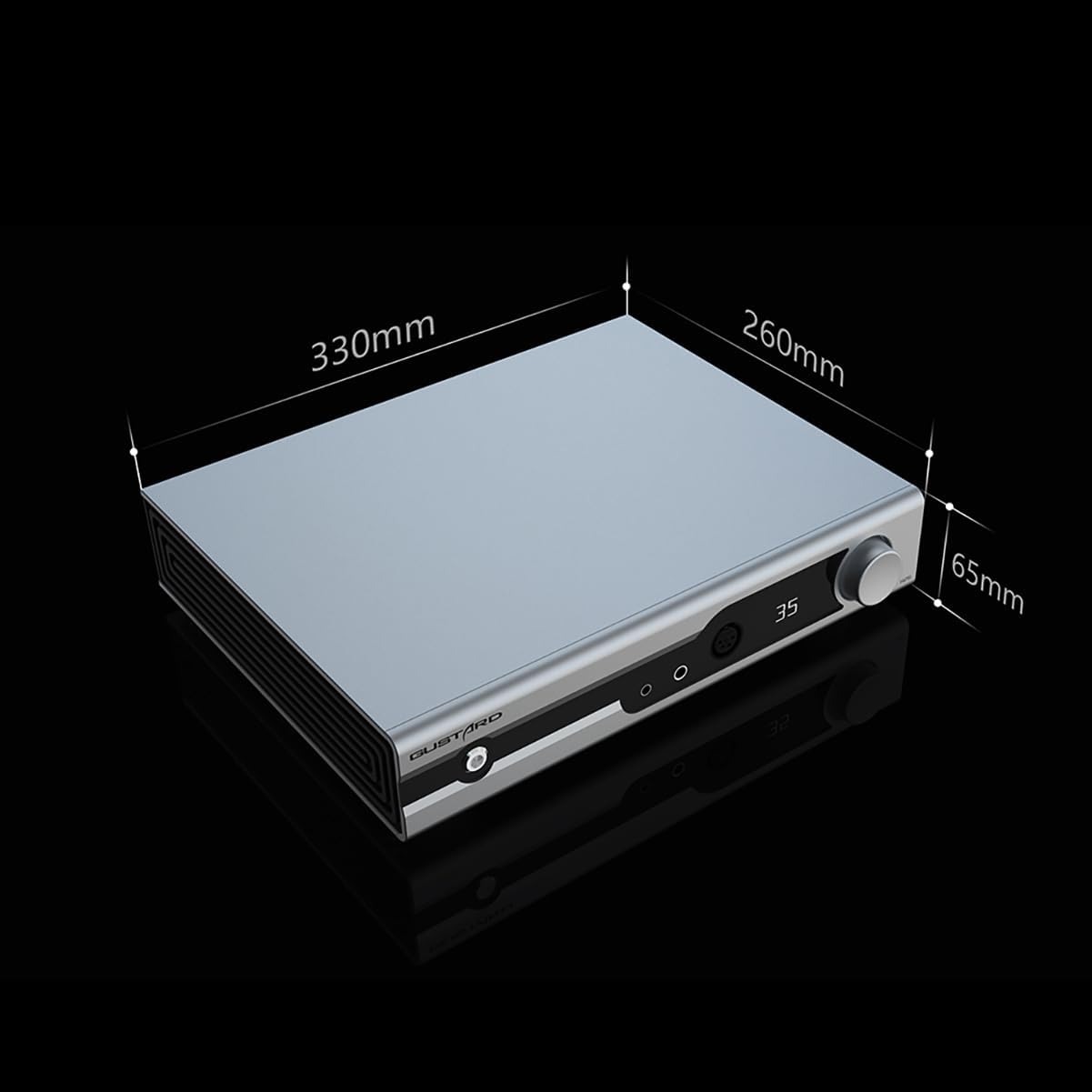
The physical dimensions of the Gustard H26 are approximately 330mm (width) x 260mm (depth) x 65mm (height).
5. Tatūnga
5.1 Te Mana Hononga
- Ensure the main power switch on the rear panel is in the OFF position.
- Manatokohia te voltage selection switch on the rear panel matches your local power supply (e.g., 115V or 230V).
- Connect the provided power cord to the AC Power Input on the rear panel and then to a suitable wall outlet.
5.2 Te Hono i nga Puna Ororongo
The H26 supports both balanced (XLR) and single-ended (RCA) audio inputs.
- For Balanced Sources: Connect your audio source's balanced outputs to the XLR 1 or XLR 2 inputs on the rear panel.
- For Single-Ended Sources: Connect your audio source's RCA outputs to the RCA inputs on the rear panel.
5.3 Hononga Paneoro
The H26 offers multiple headphone output options on the front panel.
- 4.4mm Taurite: For headphones with a 4.4mm balanced connector.
- 6.35mm te Pito Kotahi: Mō ngā paneoro me te hononga kotahi-pito paerewa 6.35mm (1/4 inihi).
- 4-Pin XLR Balanced: For headphones with a 4-pin XLR balanced connector.
5.4 Tuhinga o muaampHiringa Putanga
The H26 can also function as a preamplifier. Connect the XLR or RCA Preamp Outputs on the rear panel to your power amplifier or active speakers. The headphone amplifier section can be turned off separately when using the preampputanga lifier.
6. Mahi
6.1 Hiko / Whakaweto
- Flip the main power switch on the rear panel to the ON position.
- Press the front panel Touch Switch (1) to power on the unit from standby, or to put it back into standby.
6.2 Mana Rōrahi
Rotate the Volume/Setup Knob (7) on the front panel clockwise to increase volume and counter-clockwise to decrease volume. The matrix relay volume control ensures precise and balanced adjustments across all channels.
6.3 Kōwhiringa Tāuru
Single press the Volume/Setup Knob (7) to cycle through available input sources (XLR 1, XLR 2, RCA). The selected input will be shown on the Display Screen (6).
6.4 Te Whakatikatika Taumata Whakanui
Long press the Volume/Setup Knob (7) to switch between low and high gain levels. This allows for optimal matching with various headphones and In-Ear Monitors (IEMs).
6.5 Quiescent Current Adjustment
Double press the Volume/Setup Knob (7) to toggle between 50mA and 100mA quiescent current settings. This feature allows for fine-tuning the Class A operation.
6.6 Te whakamahi i te Mana Mamao

The included remote control provides convenient access to all primary functions from a distance.
6.7 Ataata Whakaaturanga Whakahaere
This video demonstrates the operational controls, including volume adjustment, input selection, gain level, and quiescent current settings. While the video features a similar product (Aune S17 Pro), the control principles and functions are analogous to the Gustard H26.
7. Tiaki
7.1 Te horoi
To clean the unit, disconnect it from the power source. Use a soft, dry cloth to wipe the exterior surfaces. Avoid using abrasive cleaners, solvents, or chemical sprays, as these can damage the finish.
7.2 Rokiroki
Ki te kore e whakamahia mo te wa roa, penapenahia te amplifier in a cool, dry place, away from direct sunlight and excessive dust. It is recommended to keep the original packaging for protection during storage or transport.
8. Te Raru
If you encounter issues with your Gustard H26, refer to the following common problems and solutions:
- Kore Mana: Ensure the power cord is securely connected to both the unit and the wall outlet. Check the rear panel power switch and the front panel touch switch. Verify the voltage selection switch is set correctly.
- Kore Oro: Confirm that the correct input source is selected. Check all audio cable connections (source to ampkaiwhakarewa, amplifier to headphones/speakers). Ensure headphone cables are fully inserted. Adjust the volume level.
- Oro korikori: Check audio cable integrity. Ensure the input source is not overdriving the amplifier. Try adjusting the gain level to match your headphones.
- Mana Mamao Kaore i te Mahi: Check the batteries in the remote control. Ensure there are no obstructions between the remote and the unit's remote reception window.
Mena kei te haere tonu te raru i muri i te whakamatau i enei otinga, tena koa whakapā atu ki te tautoko a te kaihoko.
9. Whakatakotoranga
- Tau tauira:
- H26
- Waitohu:
- Gustard
- Momo Tuhono:
- RCA, XLR
- Wat Putangatage:
- 50 Watts
- Puna Hiko:
- Hiko Hiko
- Tae:
- Pango
- Te maha o ngā roopu:
- 4
10. Pūtāhui me te Tautoko
10.1 Nga Korero Whakaputanga
All Gustard products purchased from authorized retailers are covered by a warranty. The standard warranty period is 1 year or more from the date of purchase, depending on the specific product and regional regulations. Please retain your proof of purchase for warranty claims.
10.2 Tautoko Kiritaki
For technical assistance, troubleshooting, or warranty inquiries, please contact your retailer or the manufacturer's customer service. Support is typically available online, and inquiries are addressed promptly.


