1. Kupu Whakataki
This instruction manual provides essential information for the installation, operation, and maintenance of your Geberit Conversion Kit Type 383 FV (Model 240.515.00.5). This kit is designed to upgrade older Geberit cisterns, specifically Type 110.800 manufactured between 1988 and 1997, to a modern two-volume flush system. This upgrade enhances water efficiency by allowing selection between a small and large flush quantity.
2. Hua Neke Atuview
The Geberit Conversion Kit facilitates the modernization of existing Geberit cisterns, improving functionality and promoting water conservation. It replaces outdated flushing mechanisms with a contemporary dual-flush system.
2.1 Ihirangi mokete
- Pereti tiaki
- Lifting bell
- Poraka kawe
- Taiapa pupuri-iho
- Basin
- Type 383 filling valve
- Maunga taputapu
2.2 Raraunga Hangarau
- Flow pressure: 10-1000 kPa
- Maximum water temperature: 25°C (77°F)
- Te pāmahana rokiroki mōrahi: 40°C (104°F)
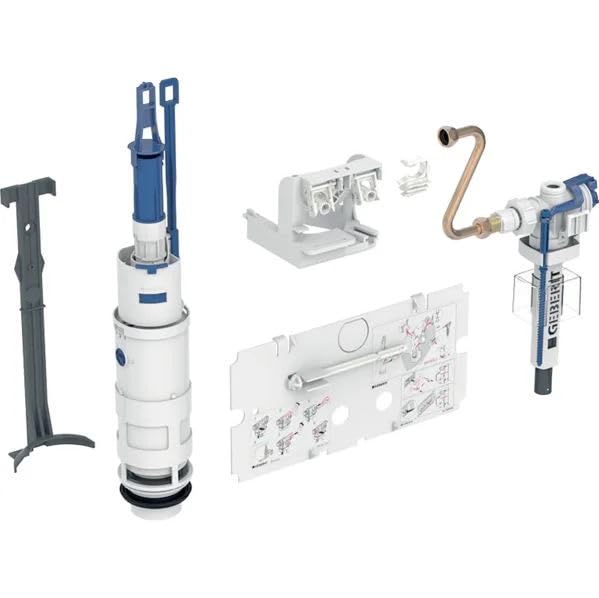
Whakaahua 1: Pahū view of the Geberit Conversion Kit components. This image displays all parts included in the kit, such as the protective plate, lifting bell, bearing block, hold-down bracket, basin, and Type 383 filling valve, along with various mounting accessories.
3. Tohutohu Tāuta
Installation of this conversion kit requires basic plumbing knowledge. If you are unsure about any steps, it is recommended to consult a qualified professional.
3.1 Tirohanga Hototahi
Ensure your existing Geberit cistern is Type 110.800 and was manufactured between 1988 and 1997. This kit is specifically designed for these models. Incompatibility may lead to improper function or damage.
3.2 Whakaritenga
- Turn off the main water supply to the toilet.
- Flush the toilet to empty the cistern.
- Remove the cistern lid and any existing flushing mechanisms.
3.3 Te Whakaritenga Wae
- Install the new protective plate and secure it according to the original cistern design.
- Assemble the lifting bell and bearing block, then position them within the cistern.
- Mount the hold-down bracket and basin, ensuring they are correctly aligned.
- Install the Type 383 filling valve, connecting it to the water supply line. Ensure all connections are tight to prevent leaks.
- Follow the specific instructions provided with the physical kit for detailed steps on adjusting components for optimal fit and function.
3.4 Huihuinga Whakamutunga
- Carefully reassemble the cistern, ensuring all parts are correctly seated.
- Turn the main water supply back on and check for any leaks.
- Test the flush mechanism to ensure both small and large flush volumes operate correctly.
4. Mahi
The Geberit Conversion Kit provides a dual-flush function. This allows you to choose between two different flush volumes to conserve water.
- Small Flush: Press the smaller button or the upper part of the flush plate for a reduced water volume flush.
- Large Flush: Press the larger button or the lower part of the flush plate for a full water volume flush.
Familiarize yourself with the flush plate associated with your cistern to identify the small and large flush actuators.
5. Tiaki
Regular maintenance ensures the longevity and efficient operation of your Geberit Conversion Kit.
- Te horoi: Periodically clean the cistern components, especially the filling valve and flush valve, to prevent mineral buildup and ensure smooth operation. Use mild cleaning agents and avoid abrasive materials.
- Takitaki turuturu: Regularly inspect for any signs of leaks around the cistern and connections. Address any leaks promptly to prevent water waste and potential damage.
- Tirohanga Wae: Annually check the condition of rubber seals and moving parts. Replace any worn or damaged components as needed.
6. Te Raru
This section addresses common issues you might encounter with your conversion kit.
- Water continuously running into the toilet bowl: This often indicates an issue with the flush valve seal or the filling valve. Check if the flush valve is seating correctly or if the filling valve is overfilling the cistern. Adjust or clean as necessary.
- Cistern not filling or filling slowly: Check the water supply valve to ensure it is fully open. Inspect the filling valve for blockages or debris.
- Te horoinga kāore i oti: Ensure the flush plate actuators are correctly engaging the flush mechanism. Check for any obstructions preventing the full movement of the lifting bell.
- Te ngoikore o te rere: Verify that the water level in the cistern reaches the recommended fill line. Adjust the filling valve if necessary.
If problems persist after attempting these troubleshooting steps, contact Geberit customer support or a qualified plumber.
7. Nga Whakatakotoranga Taipitopito
| Whakatakotoranga | Uara |
|---|---|
| Kaihanga | Geberit |
| Nama Wahi | 240.515.00.5 |
| Taumaha Tūemi | 1.69 pauna |
| Hunga Hua | 16.93 x 9.84 x 4.13 inihi |
| Tauira Tuemi | 240.515.00.5 |
| Tae | Mā |
| Te Rahi Paanui | 1 |
| Pikohiko e hiahiatia ana? | Kao |
8. Pūtāhui me te Tautoko
For information regarding product warranty, please refer to the documentation provided with your purchase or visit the official Geberit website. For technical support, spare parts, or further assistance, please contact Geberit customer service directly. Ensure you have your model number (240.515.00.5) available when contacting support.


