1. Kupu Whakataki
This manual provides essential information for the proper setup, operation, and maintenance of your Donner OURA S300 Digital Piano. Please read this manual thoroughly before using the instrument to ensure optimal performance and longevity.

Figure 1: Donner OURA S300 Digital Piano. This image displays the complete digital piano setup, including the 88-key keyboard, stand, and triple pedal unit.
2. Ihirangi mokete
Before assembly, verify that all components are present in the package:
- Donner OURA S300 Digital Piano Unit
- Triple Sustain Pedal Unit
- Pūurutau Hiko
- Tauira USB
- Pukapuka Kaiwhakamahi (tenei tuhinga)
3. Tatūnga me te Runanga
The Donner OURA S300 Digital Piano requires assembly. It is recommended that two people perform the assembly due to the weight of the main unit.
3.1 Nga Mahi Huihuinga
- Unpack all components and place them on a soft, flat surface to prevent scratches.
- Assemble the piano stand according to the included assembly guide. Ensure all screws are securely fastened.
- Carefully place the main piano unit onto the assembled stand. Align the mounting points and secure the unit with the provided screws.
- Connect the triple pedal unit cable to the designated port under the keyboard.
- Connect the power adapter to the DC IN port on the rear panel and then to a power outlet.
- If desired, connect the USB cable for MIDI connectivity to a computer or other device.
3.2 Hononga Mutungaview
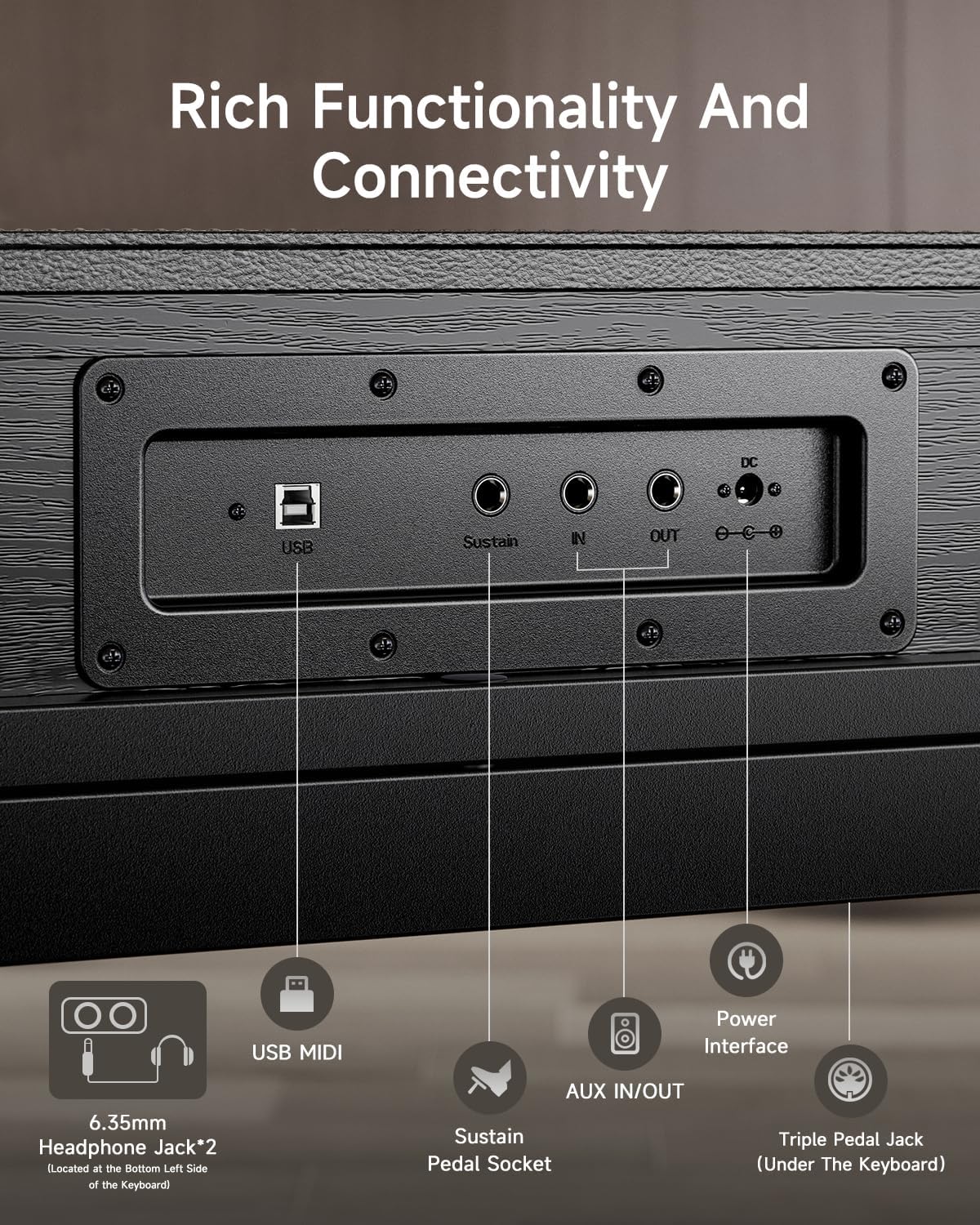
Figure 2: Rear Panel Connectivity. This image highlights the various input/output ports on the rear of the piano, including USB, Sustain, AUX IN/OUT, DC IN, and headphone jacks.
The rear panel provides various connection options:
- USB MIDI: Connects to a computer or smart device for MIDI data transfer.
- Pūnaha Pahikara Whakapūmau: For connecting the included triple pedal unit.
- AUX IN/OUT: For connecting external audio sources or routing audio to external speakers/recording devices.
- DC IN: Te tāuru hiko mō te urutau AC kua whakaurua.
- 6.35mm Headphone Jack (x2): For private practice. Located on the bottom left side of the keyboard.
4. Nga Tohutohu Whakahaere
4.1 Hiko / Whakaweto
Press the Power button located on the left side of the keyboard to turn the piano on or off.
4.2 Keyboard Touch and Sound
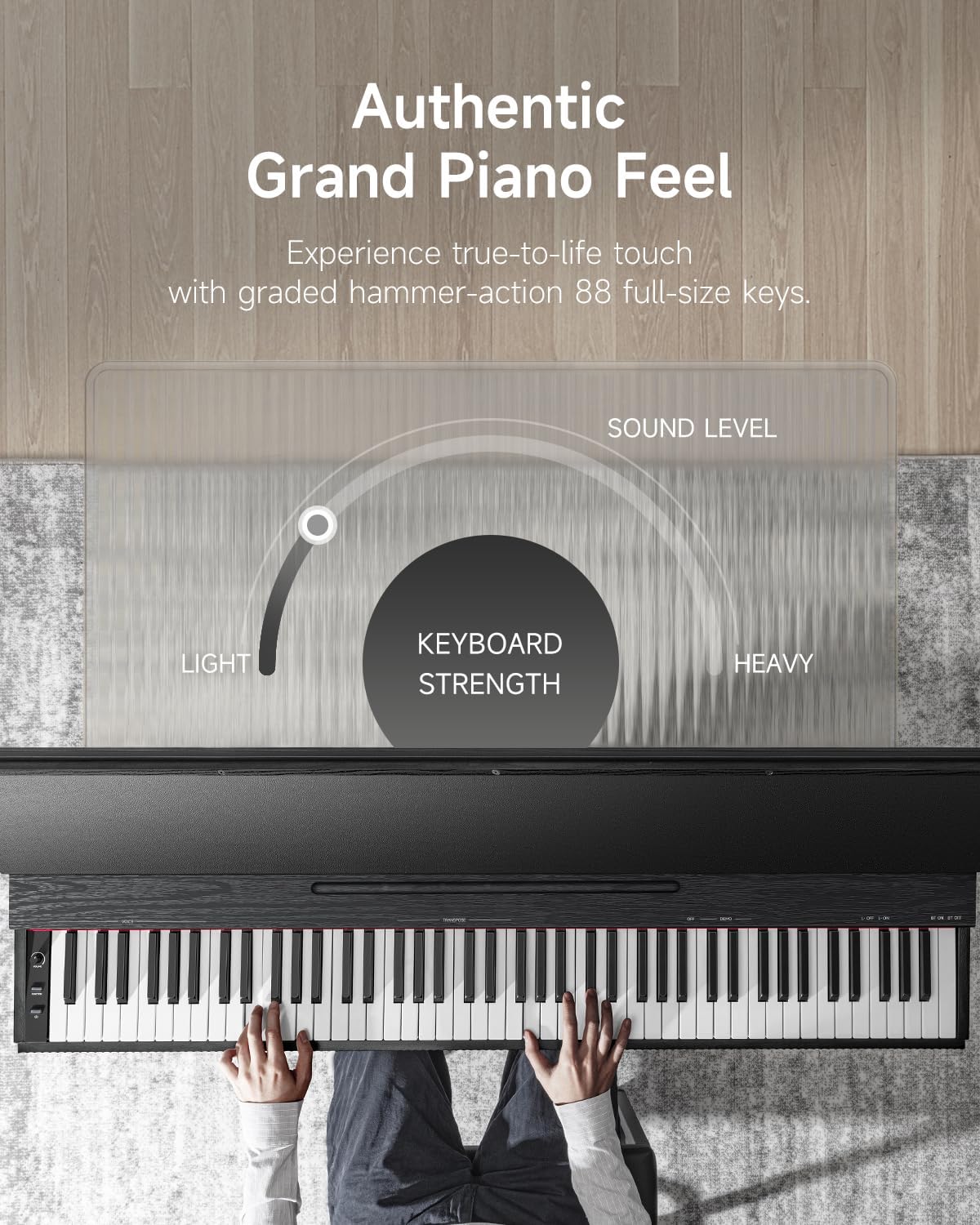
Figure 3: Authentic Grand Piano Feel. This graphic illustrates the graded hammer-action keys, showing how the keyboard strength varies from light to heavy across the 88 full-size keys, mimicking an acoustic grand piano.
The OURA S300 features 88 graded hammer-action keys, designed to replicate the feel and response of a traditional acoustic piano. The touch sensitivity can be adjusted to suit individual playing styles.
The instrument includes top-tier acoustic piano samples and a variety of other high-quality sounds, such as guitar, bass, and organ. The integrated 2*15W speaker system delivers a rich and deep sound experience.
4.3 Nga Mahi me nga ahuatanga
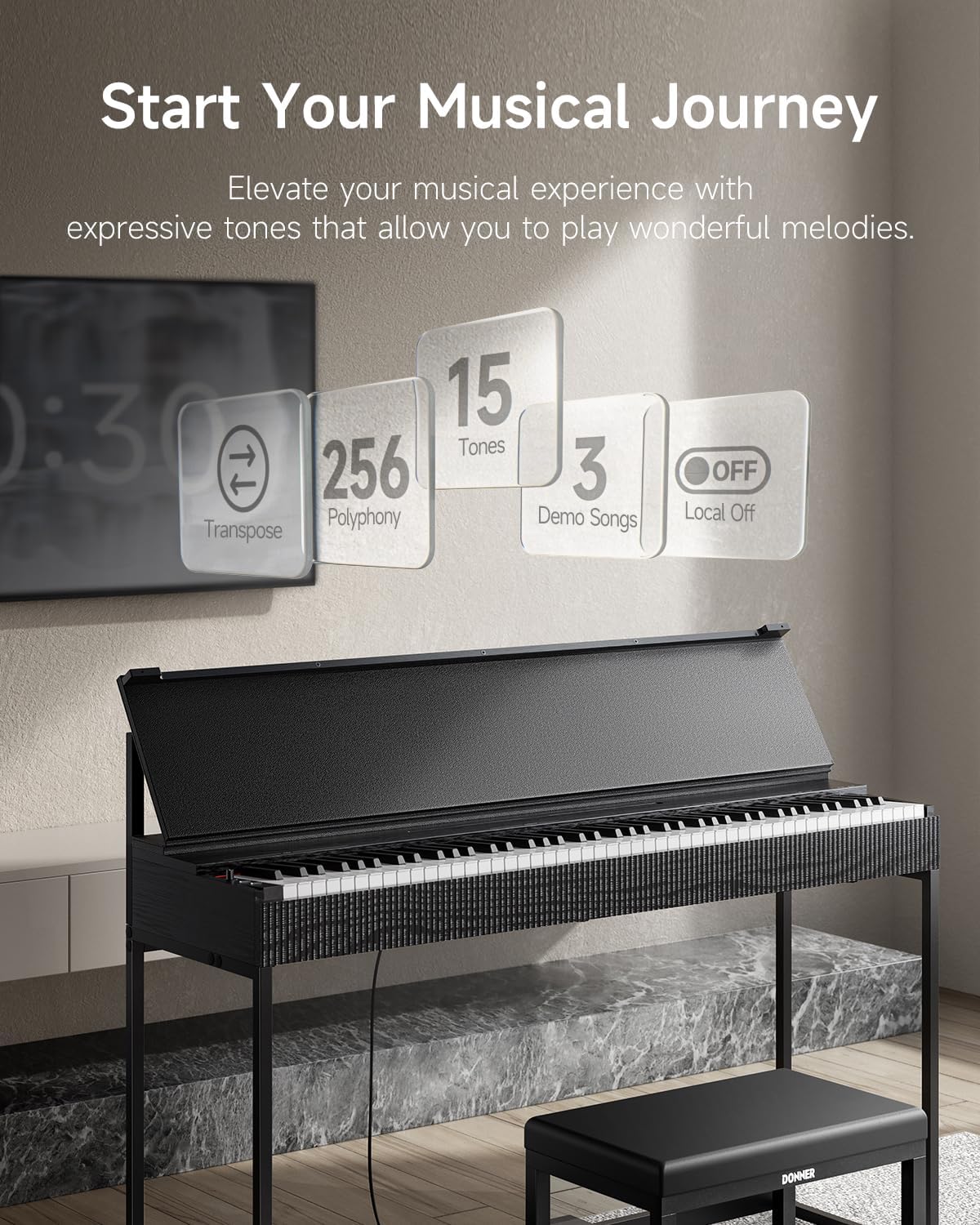
Figure 4: Key Features. This image highlights the main functional capabilities of the S300, including Transpose, 256 Polyphony, 15 Tones, 3 Demo Songs, and Local Off.
- Polyphony: 256-note polyphony allows for complex musical passages without note drop-out.
- Nga kupu: Access 15 different instrument tones, including various piano sounds, organs, and strings.
- Waiata Whakaatu: Features 3 built-in original MIDI demo songs for listening or practice.
- Whakawhiti: Adjust the pitch of the entire keyboard up or down in semitone steps.
- Paetata: Disables the internal sound generation while allowing MIDI output, useful when using the piano as a MIDI controller for external sound modules or software.
- Mana Rōrahi: Adjust the overall output volume using the dedicated knob.
4.4 Pedal Functionality
The OURA S300 includes a triple pedal unit with half-pedal functionality for all three pedals. This allows for nuanced control over sustain, sostenuto, and soft pedal effects, enhancing expressive playing.
4.5 Hononga Nihokikorangi
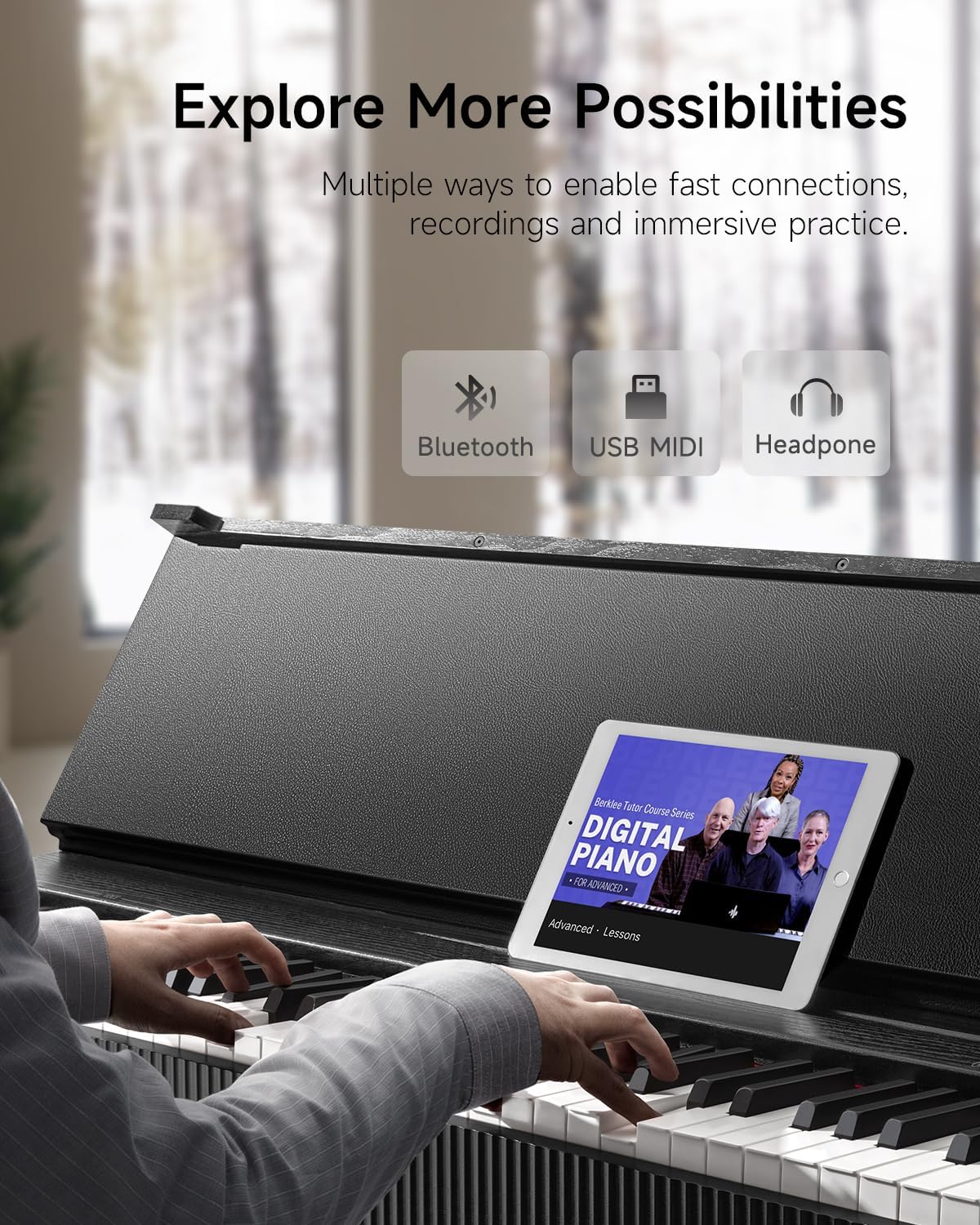
Figure 5: Expanded Possibilities with Connectivity. This image shows the piano connected via Bluetooth to a tablet running a music lesson app, and also highlights USB and headphone connections.
The piano supports Dual-Mode Bluetooth (MIDI+AUDIO). This enables:
- Nihokikorangi MIDI: Connect wirelessly to smartphones, tablets, or computers for use with music creation software, learning apps, or as a MIDI controller.
- Ororongo Nihokikorangi: Stream audio from your smart device through the piano's speakers, allowing you to play along with your favorite songs or backing tracks.
5. Tiaki
To ensure the longevity and optimal performance of your Donner OURA S300 Digital Piano, follow these maintenance guidelines:
- Te horoi: Use a soft, dry cloth to wipe down the piano's surface. For stubborn dirt, a slightly damp Ka taea te whakamahi i te kakahu, ā, muri iho ka whakamahia he kakahu maroke. Āta karohia ngā kai horoi whakakoi, ngā whakarewa rānei.
- Parenga puehu: When not in use, cover the keyboard with a dust cover to prevent dust accumulation.
- Taiao: Keep the piano away from direct sunlight, extreme temperatures, and high humidity. Avoid placing it near heat sources or in areas with significant temperature fluctuations.
- Te whakahaere: Avoid placing heavy objects on the keyboard or applying excessive force to the keys or pedals.
6. Te Raru
If you encounter issues with your Donner OURA S300, refer to the following common troubleshooting steps:
- Kore Oro:
- Me whakarite kei te hono tika te urutau hiko, ā, kua whakakāhia te piano.
- Check the volume knob and ensure it is not set to minimum.
- Mena kua hono nga taringa, momotuhia kia tirohia te whakaputanga orooro.
- Verify that 'Local Off' mode is not activated if you expect sound from the internal speakers.
- Keys Not Responding / Uneven Volume:
- Me whakarite karekau he taonga ke e noho ki waenga i nga ki.
- If specific keys consistently have low volume, contact customer support for assistance.
- Kaore i te mahi nga pedal:
- Check that the pedal unit cable is securely connected to the correct port.
- Ensure the pedal unit is placed on a stable surface.
- Nga Take Hononga Nihokikorangi:
- Me whakarite kua whakahohea te Nihokikorangi i runga i te piano me tō pūrere atamai.
- Ngana ki te whakaara ano i nga taputapu e rua.
- Ensure no other devices are actively connected to the piano via Bluetooth.
If the problem persists after attempting these steps, please contact Donner customer support.
7. Whakatakotoranga
| Āhuahira | Whakatakotoranga |
|---|---|
| Ingoa Tauira | S300 |
| Te maha o nga Kī | 88 |
| Mahi Matua | Graded Hammer Standard, Hammer Action |
| Polyphony | 256 |
| Kaikōrero | 2 x 15 W |
| Ahu (L x W x H) | 50.75" x 15" x 36.6" (128.9 cm x 37.9 cm x 92.8 cm) |
| Taumaha Tūemi | 34.4 kg (75.7 lbs) |
| Hononga | Bluetooth (MIDI+AUDIO), USB MIDI, AUX IN/OUT, 2x 6.35mm Headphone Jacks |
| Nga waahanga motuhake | Half-pedal support, LOCAL OFF, Transpose |
| Puna Mana | Pouaka AC |

Figure 6: Product Dimensions. This image provides a visual representation of the piano's dimensions in both centimeters and inches.
8. Pūtāhui me te Tautoko
For warranty information, please refer to the documentation provided at the time of purchase or visit the official Donner website. If you require technical assistance or have questions not covered in this manual, please contact Donner customer support.
Donner Customer Support: Tirohia te Toa Donner i runga i a Amazon


