1. Kupu Whakataki
This manual provides essential information for the safe and efficient operation of your TYAN MiTAC Thunder CX GC68A-B7126 B7126G68AV10E2HR -1U2S Cloud Server. It covers installation, configuration, maintenance, and troubleshooting procedures. Please read this manual thoroughly before installing or operating the server.
2. Nga korero haumaru
Kia mau ki ngā mahi ārai haumaru e whai ake nei hei ārai i ngā whara me ngā pakaru o ngā taputapu:
- Me momotu te hiko i mua i te whakahaere i tētahi tikanga tiaki, tāutanga rānei.
- Me whakarite te turanga tika kia kore ai e ru te hiko.
- Handle components with care to avoid electrostatic discharge (ESD) damage. Use an anti-static wrist strap.
- Do not operate the server in environments with excessive heat, humidity, or dust.
- Ensure adequate ventilation around the server to prevent overheating.
3. Ihirangi mokete
Verify that all items are present and undamaged. If any items are missing or damaged, contact your vendor immediately.
- TYAN MiTAC Thunder CX GC68A-B7126 Server Unit
- Power Cords (quantity may vary by region)
- Kete Reriwe Maunga Rack
- Documentation (Quick Start Guide, CD/USB with drivers and utilities)
- Accessory Kit (screws, cables, etc.)
4. Tino Tinoview
Ko tenei waahanga e whakarato ana i te mutungaview of the server's external and internal components.
4.1 Mua me Muri View
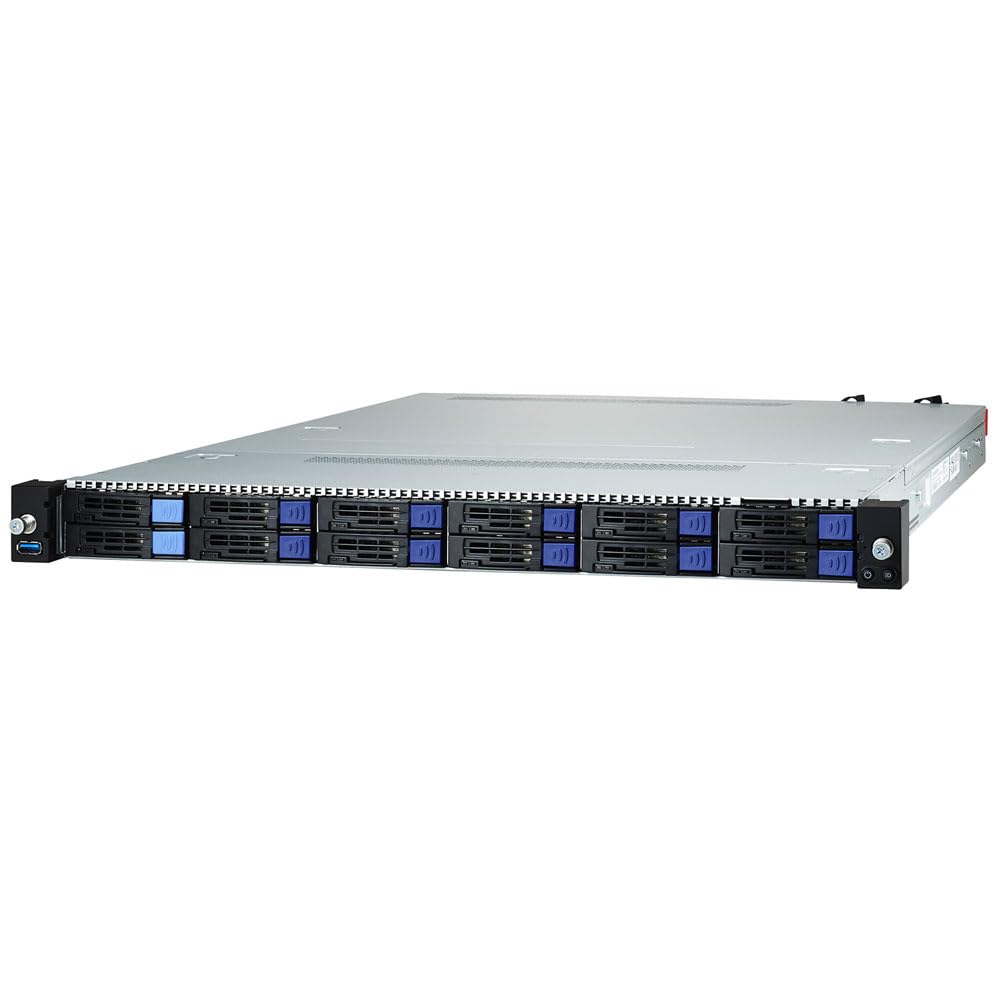
Pikitia 4.1: Te taha mua me te taha muri kua whakakotahi view of the server, showing hot-swap drive bays on the front and I/O ports and redundant power supplies on the rear.
4.2 Paewhiri Mua
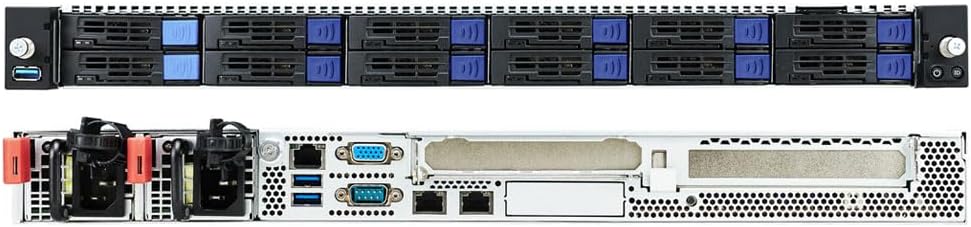
Figure 4.2: Close-up of the server's front panel, featuring 12 hot-swap 2.5-inch drive bays, USB ports, and system status LEDs.
4.3 Tahora ā-roto
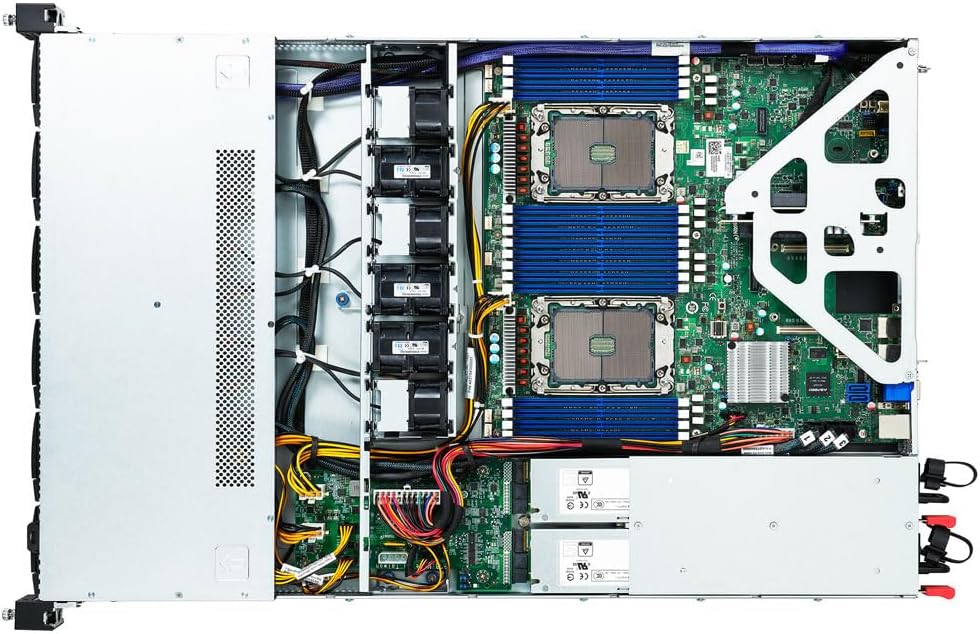
Whakaahua 4.3: Roto view of the server, showcasing the motherboard with DIMM slots, CPU sockets, PCIe slots, and cooling fan modules.
5. Tatūnga
5.1 Te Whakanoho Rack
The server is designed for installation in a standard 19-inch rack. Follow the instructions provided with the rackmount rail kit to securely mount the server.
5.2 Te Whakaritenga Wae
Before installing components, ensure the server is powered off and disconnected from the power source.
5.2.1 Memory (DIMMs) Installation
- Open the server chassis cover.
- Kimihia nga mokamoka DIMM i runga i te papahoahoa.
- Open the retaining clips at both ends of the DIMM slot.
- Align the memory module with the slot key and press firmly until the clips snap into place.
- Ensure all DIMMs are seated correctly.
5.2.2 Te Whakanoho Puku Rokiroki
The server supports 2.5-inch hot-swap SATA and NVMe drives.
- For hot-swap drives, ensure the drive tray is empty.
- Mount the 2.5-inch drive into the drive tray using the provided screws.
- Slide the drive tray into an available hot-swap bay until it clicks into place.
- For M.2 NVMe drives, open the chassis and locate the M.2 slot on the motherboard. Install the M.2 drive and secure it with the screw.
5.2.3 Tāutanga Kāri PCIe
The server features 2 x FH/HL PCIe Gen4 x16 slots.
- Open the server chassis cover.
- Remove the blanking plate from the desired PCIe slot.
- Carefully insert the PCIe card into the slot, ensuring it is fully seated.
- Secure the card with the retaining mechanism or screw.
5.3 Te taura waea
- Nga taura hiko: Connect the redundant power supplies to separate power sources for redundancy.
- Tauira Whatunga: Connect the GbE ports to your network infrastructure. Connect the dedicated IPMI port for remote management.
- Ngā Taura Āpiti: Connect any necessary USB devices, keyboard, mouse, or VGA monitor.
5.4 Hiko Tuatahi
After all components are installed and cables connected, press the power button on the front panel. Observe the system LEDs for normal operation. The server should initiate the boot process.
6. Operating the Server
6.1 Whirihoranga BIOS/UEFI
To access the BIOS/UEFI setup utility, press the designated key (usually DEL or F2) during the Power-On Self-Test (POST) sequence. Here you can configure boot order, system time, and other hardware settings.
6.2 Tāuta Pūnaha Whakahaere
Insert your operating system installation media (USB drive or network boot) and configure the boot order in BIOS/UEFI to start from the installation media. Follow the on-screen instructions to install your preferred operating system.
6.3 IPMI Management
The Intelligent Platform Management Interface (IPMI) allows for remote monitoring and management of the server, even when the main operating system is not running. Connect the dedicated IPMI LAN port to your network. Access the IPMI web atanga mā a web browser using the assigned IP address. Refer to the IPMI user guide for detailed instructions.
7. Tiaki
Mā te tiaki auau ka tino pai te mahi me te roa o te ora o tō tūmau.
7.1 Whakahoutanga Firmware
Tirohia i ia wa i te kaihanga website for updated BIOS, BMC, and other component firmware. Keeping firmware up-to-date can improve stability, performance, and security. Follow the provided instructions carefully during the update process.
7.2 Whakakapinga Wae
- Hot-Swap Drives: Drives can be replaced without powering down the server. Ensure the replacement drive is compatible and follow the operating system's procedures for drive replacement in a RAID configuration.
- Redundant Power Supplies: The server features hot-swappable redundant power supplies. If one PSU fails, it can be replaced while the server remains operational. Disconnect the failed PSU, remove it, and insert the new one.
7.3 Te horoi
Dust accumulation can impede airflow and cause overheating. Periodically clean the server's interior using compressed air. Ensure the server is powered off and disconnected from power before cleaning. Do not use liquid cleaners directly on components.
8. Te Raru
Ko tenei waahanga e whakarato ana i nga otinga mo nga take noa ka pa ki a koe.
8.1 Nga take me nga otinga noa
- Kore Mana: Check power cable connections, power supply status LEDs, and ensure power outlets are functional.
- Boot Failure: Verify boot order in BIOS/UEFI, check for loose memory modules or expansion cards, and ensure storage drives are detected.
- Nga Take Hononga Whatunga: Check network cable connections, network adapter status LEDs, and network configuration in the operating system.
- Te wera nui: Ensure proper ventilation, clean dust from fans and heatsinks, and check ambient temperature.
8.2 Tohu LED
Refer to the server's front panel and internal LEDs for diagnostic information. Different LED patterns or colors indicate specific system statuses or errors. Consult the detailed hardware manual for a complete list of LED codes.
9. Whakatakotoranga
| Āhuahira | Whakatakotoranga |
|---|---|
| Waitohu | Tyan |
| Ingoa Tauira | B7126G68AV10E2HR |
| Tukatuka | Intel (others) |
| Hangarau RAM | DDR4 |
| RAM Installed Size | 1 TB |
| RAM Maximum Size | 1 TB |
| Momo Puku Maama | SSD |
| Atanga Puku Maama | eSATA |
| Te Tere Hurihuri Puku Maama | 7200 RPM |
| Kaari Whakairoiro | Whakauru |
| Tauranga USB 2.0 | 1 |
| Tauranga USB 3.0 | 1 |
| Taumaha Tūemi | 49 pauna |
| Ahu mōkihi | 38 x 23 x 10 inihi |
| Whakamahinga Tauwhāiti | Pakihi |
10. Pūtāhui me te Tautoko
This TYAN server comes with a standard manufacturer's warranty. For detailed warranty terms and conditions, please refer to the warranty card included with your product or visit the official Tyan website. For technical support, driver downloads, and further assistance, please contact Tyan customer service or your authorized reseller.


