1. Kupu Whakataki
Mauruuru koe mo te hokoasing the Panasonic SR-N210D-W IH Rice Cooker. This appliance is designed to provide delicious, perfectly cooked rice with advanced heating technology and convenient features. Please read this instruction manual thoroughly before use to ensure safe and optimal operation. Keep this manual for future reference.

Whakaahua: Koki view of the Panasonic SR-N210D-W IH Rice Cooker in white.
2. Nga Korero Haumaru Nui
To prevent injury, electric shock, fire, and damage to the appliance, always observe the following safety precautions:
- Kaua e rukuhia te wae matua ki te wai, ki etahi atu wai ranei.
- Ensure the power cord is not damaged, pinched, or placed near hot surfaces.
- Do not operate the appliance if it is damaged or malfunctioning. Contact customer support for repairs.
- Kaua e taea e nga tamariki. Ko tenei taputapu ehara i te mea mo te whakamahi ma te hunga he iti te kaha o te tinana, o te tairongo, o te hinengaro ranei mena ka matakihia.
- Wewetehia te taputapu mai i te putanga hiko ina kore e whakamahia, i mua i te horoi, i te waa tiaki ranei.
- Use only the accessories provided or recommended by Panasonic.
- Do not block the steam vent during operation.
3. Nga waahanga me nga waahanga
3.1 Nga Waahanga Matua

Whakaahua: Mua view of the rice cooker, showing the control panel and lid.
- Waeine Matua: Ka noho nga huānga whakawera me te paewhiri mana.
- Inner Pot (Binchotan Pot): The cooking vessel with a special Binchotan charcoal coating for enhanced heat transfer.
- Lid Heating Plate: Detachable plate inside the lid for even heating and easy cleaning.
- Paewhiri Mana: Digital display and buttons for various cooking functions and settings.
- Putanga mamaoa: Releases steam during cooking.
3.2 Nga waahanga matua
- High Power IH Heating: Utilizes induction heating to evenly distribute heat throughout the inner pot, ensuring each grain of rice is cooked thoroughly and fluffy.
- Binchotan Pot: The inner pot features a Binchotan charcoal coating, known for its far-infrared properties, which helps to transfer heat efficiently to the core of each rice grain, enhancing flavor.
- Moist Keep (24-Hour Warmth Retention): Maintains an optimal temperature to keep rice moist and delicious for up to 24 hours after cooking.
- Hoahoa ngawari: A sleek and minimalist design that blends seamlessly into any kitchen environment.

Image: Diagram showing how IH heating coils and a heater element surround the inner pot for comprehensive heating.

Whakaahua: He tata view of the black inner pot, highlighting its Binchotan coating.

Image: A rice scoop lifting fluffy, moist rice from the inner pot, illustrating the Moist Keep feature.

Image: The rice cooker positioned in a clean, modern kitchen, showcasing its simple and adaptable design.
4. Tatūnga
4.1 Te Wetewete
- Kia ata tangohia te tunu raihi me nga taputapu katoa mai i te kete.
- Check that all included items are present: main unit, inner pot, lid heating plate, measuring cup, and rice scoop.
- Tangohia ngā kiriata tiaki, ngā rauemi takai rānei i te taputapu.
4.2 Te horoi tuatahi
Before first use, clean the removable parts:
- Wash the inner pot, lid heating plate, measuring cup, and rice scoop with mild dish soap and warm water. Rinse thoroughly and dry completely.
- Mukua te taha o waho o te waahanga matua me te panuiamp kakahu. Kaua e whakamahi i nga horoi horoi.
4.3 Whakanoho
- Whakatakotoria te oumu raihi ki runga i tētahi mata pumau, papatahi, ā, e ātete ana ki te wera.
- Ensure there is adequate ventilation around the appliance, especially around the steam vent. Avoid placing it directly under cabinets that may be damaged by steam.
- Monohia te taura hiko ki roto i te putanga hiko kua tu.
5. Nga Tohutohu Whakahaere
5.1 Te tunu raihi taketake
- Ine raihi: Use the provided measuring cup to measure the desired amount of rice. (One cup is approximately 180ml).
- Horoi raihi: Horoihia te raihi kia tino marama te wai.
- Tāpiri wai: Place the washed rice into the inner pot. Add water up to the corresponding water level mark inside the pot for the type and quantity of rice.
- Whakatakotohia te ipu o roto: Insert the inner pot into the main unit, ensuring it sits correctly.
- Katia te taupoki: Katia te taupoki kia mau kia pāwhiri rā anō.
- Tīpako Akoranga: The default setting is usually for white rice. If you need a different course (e.g., brown rice, porridge), use the menu buttons to select it.
- Tīmata te tunu: Press the "Cook" button. The cooking indicator will light up, and the display will show the remaining cooking time or a cooking progress animation.
- Whakaoti: Once cooking is complete, the appliance will beep, and automatically switch to the "Keep Warm" function.
- Mahi: Open the lid, fluff the rice with the rice scoop, and serve.

Image: A finger pressing the 'Cook' button on the control panel to start the cooking process.
5.2 Special Cooking Courses
The SR-N210D-W offers various courses for different needs:
- Small Quantity Course: Designed for cooking smaller portions of rice without compromising quality.
- High-Speed Course: For busy days, this course reduces cooking time while still delivering delicious results. It involves extended soaking and pressure application.
- Other courses may include Brown Rice, Stew, Porridge, and Eco Cooking. Refer to the control panel for available options.

Image: Two bowls of rice, one labeled 'Small Quantity Course' showing fluffy rice, and another labeled 'High-Speed Course' showing well-cooked rice.
5.3 Texture Selection
Adjust the rice texture to your preference or for specific dishes:
- Normal (ふつう): Standard texture for everyday rice.
- Hard (かため): For a firmer texture, suitable for dishes like Gapao Rice.
- Soft (やわらか): For a softer texture, ideal for dishes like Risotto.
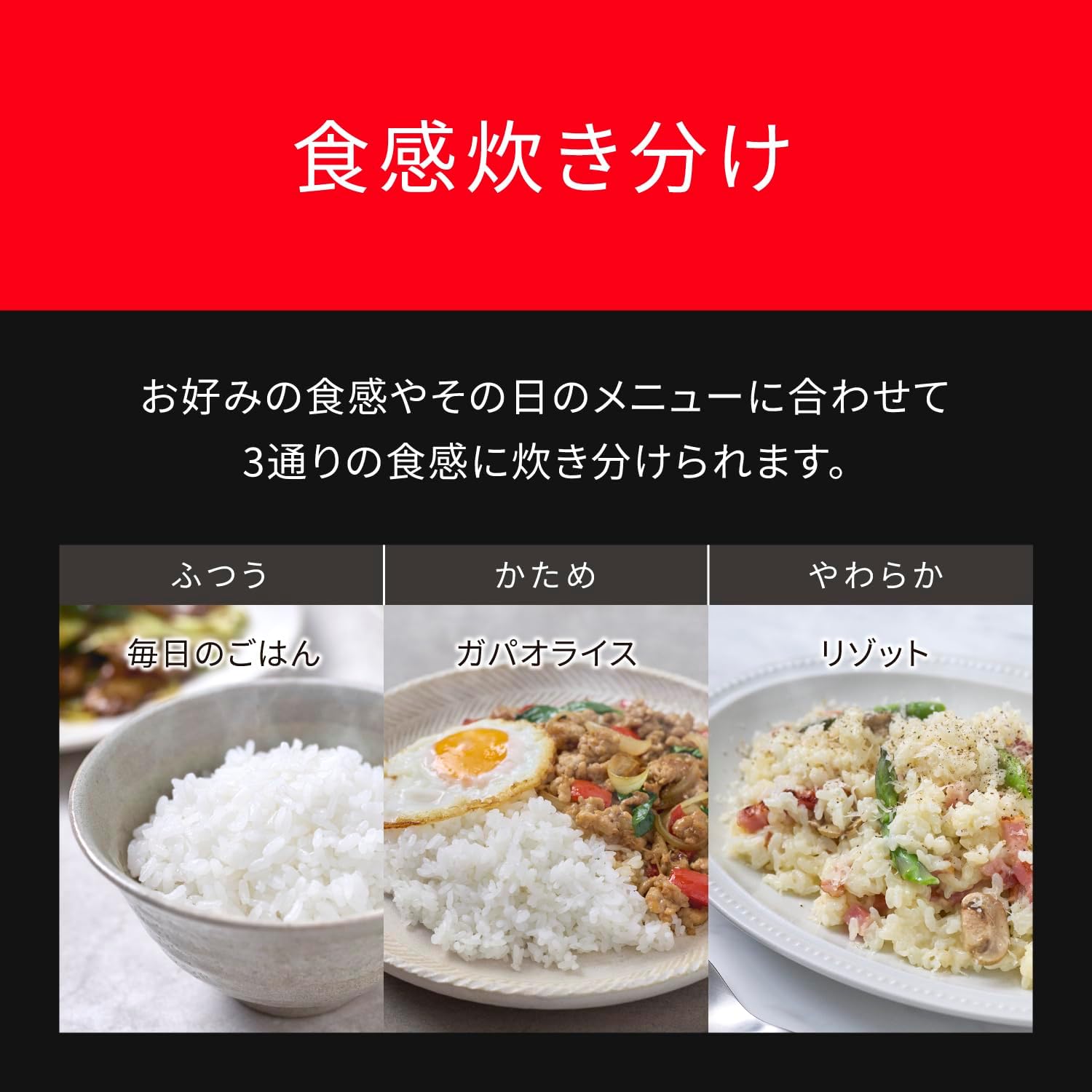
Whakaahua: E toru example dishes: a bowl of regular rice (Normal), Gapao Rice (Hard), and Risotto (Soft), illustrating the texture cooking options.
5.4 Pupuri Mahi Mahana
The rice cooker automatically switches to the "Keep Warm" mode after cooking. This function maintains the rice at an optimal temperature for up to 24 hours, preserving its moisture and flavor. To cancel, press the "Cancel/Off" button.
6. Tiaki me te Whakapai
Regular cleaning ensures hygiene and extends the lifespan of your rice cooker.
6.1 Daily Cleaning (Removable Parts)
- Ensure the rice cooker is unplugged and cooled down.
- Remove the inner pot and the lid heating plate.
- Wash these parts with mild dish soap and warm water. The lid heating plate is dishwasher-safe.
- Horoia rawatia ka maroke rawa i mua i te whakahiato.

Image: The inner pot and lid heating plate, with an inset demonstrating the lid heating plate being placed into a dishwasher.
6.2 Exterior and Stainless Clear Frame
- Horoia te taha o waho o te waahanga matua ki te ngohengohe, damp kakahu.
- The stainless clear frame is designed to be flat and easy to wipe clean, and its stainless material helps prevent stains.
- Do not use harsh chemicals, abrasive pads, or metal brushes.
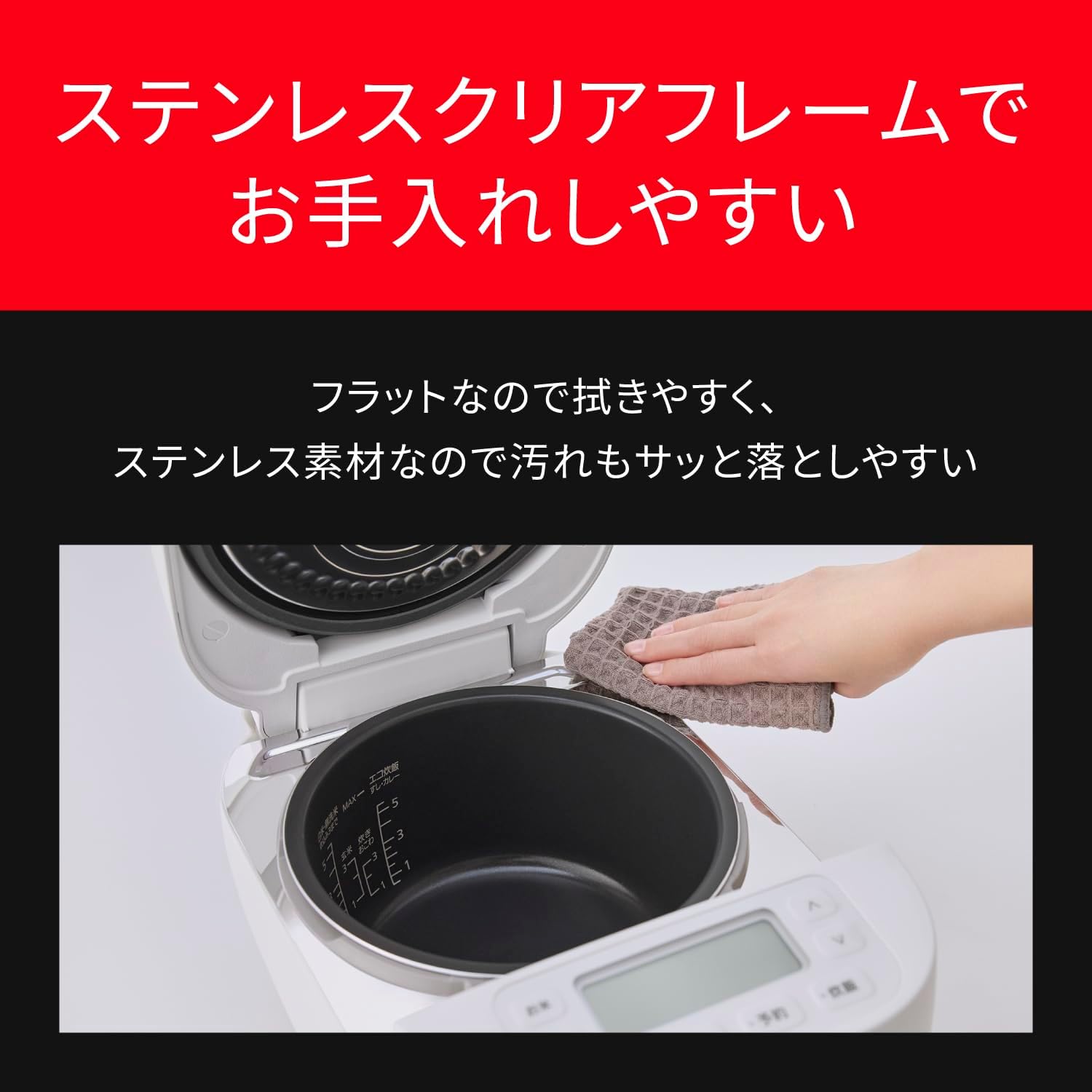
Image: A hand wiping the stainless clear frame around the inner pot with a cloth, demonstrating ease of cleaning.
7. Te Raru
If you encounter any issues, please refer to the following table before contacting customer support.
| Raruraru | Take pea | Rongoā |
|---|---|---|
| Kāore i tino maoa te raihi, he mārō rānei. | He iti te wai; hē te ōwehenga raihi-ki-wai; kāre i tika te noho o te kohua o roto. | Ensure correct water level; check inner pot placement; try adding a little more water next time. |
| Kua maoa rawa te raihi, kua pūngāwerewere rānei. | He nui rawa te wai; hē te ōwehenga raihi-ki-wai. | Ensure correct water level; try reducing water slightly next time. |
| Rice cooker does not start. | Ko te taura hiko kaore i te mono; mana outage; kāore i te tika te katinga o te taupoki. | Check power connection; ensure lid is securely closed. |
| Steam leaks from the lid. | Lid not closed properly; foreign object on sealing gasket. | Close lid firmly; clean the sealing gasket and lid heating plate. |
| Rice has an unusual odor. | Residue from previous cooking; appliance needs cleaning. | Thoroughly clean the inner pot, lid heating plate, and main unit interior. |
8. Whakatakotoranga

Image: A diagram illustrating the dimensions (height 22.4cm, width 24.0cm, depth 37.7cm) and weight (5.0kg) of the rice cooker, along with included accessories: instruction manual, measuring cup, and rice scoop.
| Āhuahira | Taipitopito |
|---|---|
| Tau tauira | SR-N210D-W |
| Waitohu | Panasonic |
| Te kaha | 5.5 Kapu (1.0 rita) |
| Tikanga Whakawera | IH (Induction Heating) |
| Roto Pot | Binchotan Pot |
| Pupuri Mahi Mahana | Moist Keep (up to 24 hours) |
| Nga Ahinga Hua (W x D x H) | 24.0 cm x 37.7 cm x 22.4 cm (Approximately 9.4 in x 14.8 in x 8.8 in) |
| Taumaha Hua | 5.0 kg (Approximately 11 lbs) |
| Tae | Mā |
| Puna Mana | Waea hiko AC |
| Tohutohu Tiaki | Hand wash (Inner Pot), Dishwasher safe (Lid Heating Plate) |
| Nga taputapu kei roto | Instruction Manual, Measuring Cup, Rice Scoop |
9. Pūtāhui me te Tautoko
Mo nga korero whakamana, tirohia te kaari raihana kei roto i to hua me toro atu ranei ki te Panasonic mana website for your region. For technical support, service, or replacement parts, please contact Panasonic customer service.
Please have your model number (SR-N210D-W) and purchase date ready when contacting support.
Panasonic Mana Webpae: www.panasonic.com


