1. Kupu Whakataki
This manual provides detailed instructions for the installation, operation, and maintenance of your MOES WiFi Smart Light Switch (1-Gang). This smart switch is designed to enhance your home lighting control with convenience and smart features.
Āhuatanga matua:
- Supports both no-neutral wire and with-neutral wire configurations.
- No hub required; connects directly to your 2.4GHz Wi-Fi network.
- Hototahi ki a Alexa me Google Assistant mō te whakahaere reo.
- Remote control via smartphone application.
- Timer and scheduling functions for automated lighting.
- Space-saving design fits most standard wall boxes.

Image 1.1: MOES WiFi Smart Light Switch packaging and the 1-gang switch unit.
2. Nga korero haumaru
- Me whakaweto te hiko o te pūwhakaweto ara iahiko i mua i te tāutanga, i te tiaki rānei.
- Mena kāore koe i te tino mōhio ki ngā waea hiko, whakapā atu ki tētahi tohunga hiko whai tohu.
- This switch is designed for indoor use only.
- Do not exceed the maximum load ratings specified in the product specifications.
3. Aratohu Whakauru
3.1. Rarangi Arowhai i mua i te whakaurunga
- Ensure your home has a 2.4GHz Wi-Fi network. 5GHz networks are not supported.
- Confirm the existing wiring in your wall box (neutral wire present or not).
- Tools required: Screwdriver, wire strippers, voltage Kaiwhakamatautau.
3.2. Tohutohu Waea
The MOES Smart Light Switch supports both neutral wire and no-neutral wire configurations. Please identify your wiring type before proceeding.
3.2.1. No-Neutral Wire Installation
If your wall box does not have a neutral wire, a capacitor (included in the package) is required for proper operation. This capacitor must be connected across the light bulb terminals.
- Whakawetohia te hiko: Locate your circuit breaker and turn off the power to the switch you are replacing. Verify power is off with a voltage Kaiwhakamatautau.
- Tautuhia nga waea: In your wall box, identify the Line (Live) wire, Load wire(s), and Ground wire.
- Connect wires to the switch:
- Connect the Line wire to the 'L' terminal on the smart switch.
- Connect the Load wire(s) to the 'L1' (OUT) terminal. For 1-gang switches, typically only L1 is used.
- Connect the Ground wire to the 'GND' terminal.
- Install Capacitor: Connect the provided capacitor across the light bulb terminals (between the live and neutral wires at the light fixture). This is crucial for no-neutral setups to ensure stable power to the smart switch.
- Maunga te pana: Secure the smart switch into the wall box and attach the faceplate.
- Whakaora mana: Whakahokia ano te hiko i te ara iahiko.

Image 3.1: Wiring diagram for no-neutral wire installation, showing capacitor connection.

Image 3.2: Comparison of Neutral + Live Wire and No Neutral Wire diagrams, highlighting the capacitor for no-neutral setups.
3.2.2. With-Neutral Wire Installation
If your wall box has a neutral wire, the installation is straightforward.
- Whakawetohia te hiko: Locate your circuit breaker and turn off the power to the switch you are replacing. Verify power is off with a voltage Kaiwhakamatautau.
- Tautuhia nga waea: In your wall box, identify the Line (Live) wire, Neutral wire, Load wire(s), and Ground wire.
- Connect wires to the switch:
- Connect the Line wire to the 'L' terminal on the smart switch.
- Connect the Neutral wire to the 'N' terminal.
- Connect the Load wire(s) to the 'L1' (OUT) terminal. For 1-gang switches, typically only L1 is used.
- Connect the Ground wire to the 'GND' terminal.
- Maunga te pana: Secure the smart switch into the wall box and attach the faceplate.
- Whakaora mana: Whakahokia ano te hiko i te ara iahiko.
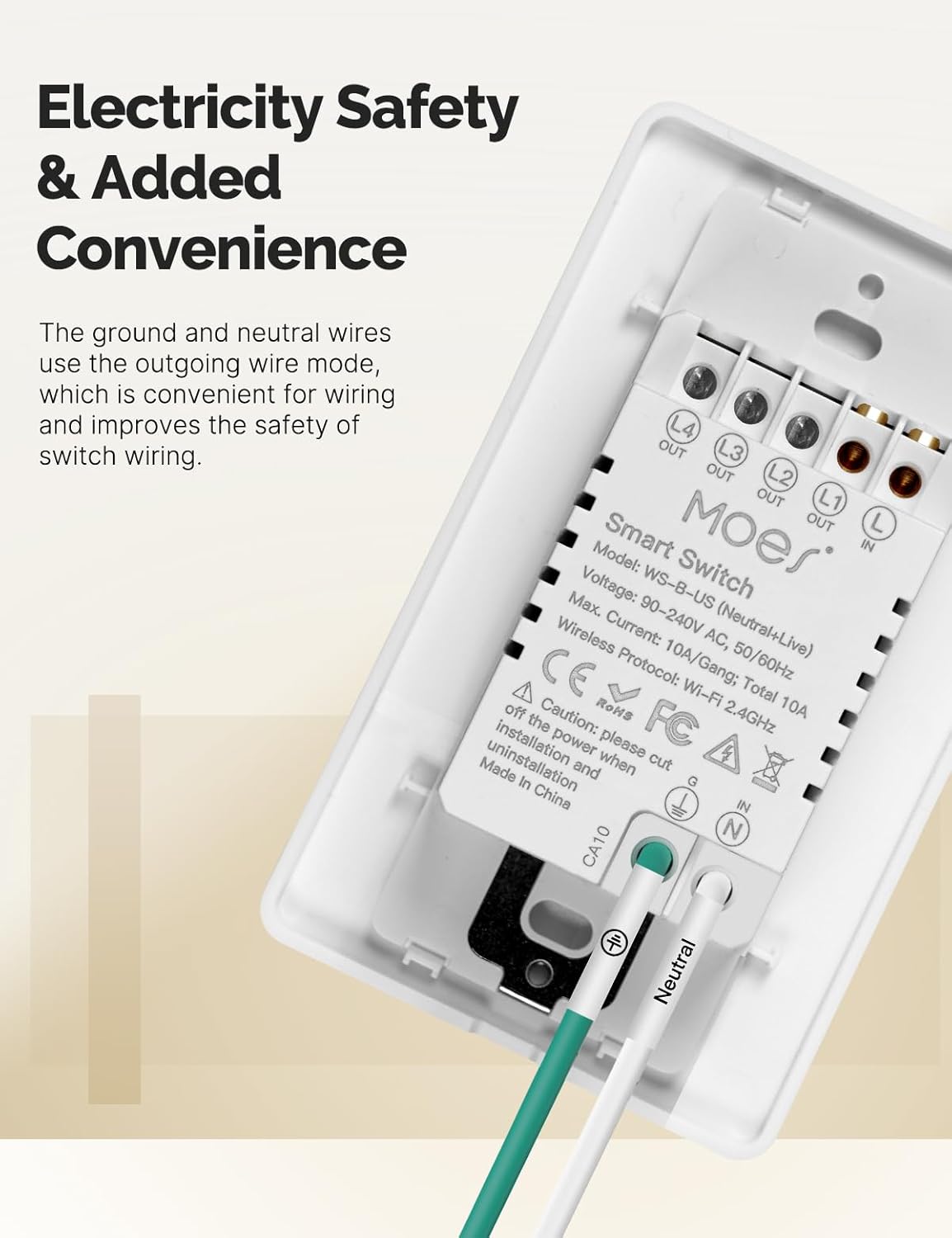
Whakaahua 3.3: Whakamuri view of the MOES Smart Switch showing wiring terminals for Line, Neutral, Load, and Ground connections.
3.3. Te Hononga Taupānga
- Tikiake i te Taupānga: Download the "Smart Life" or "MOES" app from your smartphone's app store.
- Rēhita/Takiuru: Waihangahia he kaute, takiuru ranei ki te taupānga.
- Tāpiri Pūrere: Tap the '+' icon in the top right corner of the app to add a new device.
- Tīpako Momo Pūrere: Choose "Electrical" then "Light Switch" or "Switch (Wi-Fi)".
- Whakauruhia nga Taipitopito Wi-Fi: Ensure your phone is connected to a 2.4GHz Wi-Fi network. Enter your Wi-Fi password.
- Aratau takirua: The switch should automatically enter pairing mode (indicator light blinking rapidly). If not, press and hold the switch button for 5-10 seconds until it blinks rapidly.
- Whakaotia te takirua: Follow the on-screen instructions in the app to complete the pairing process. Once connected, you can rename the switch.
Video 3.1: A visual guide demonstrating the general installation process for the MOES Smart Light Switch, including wiring and app pairing. (Note: Video may show a multi-gang switch, but principles apply to 1-gang).
4. Nga Tohutohu Whakahaere
4.1. Mana a-ringa
Press the physical button(s) on the switch to turn the connected light(s) on or off. The switch features high-quality buttons for reliable operation.
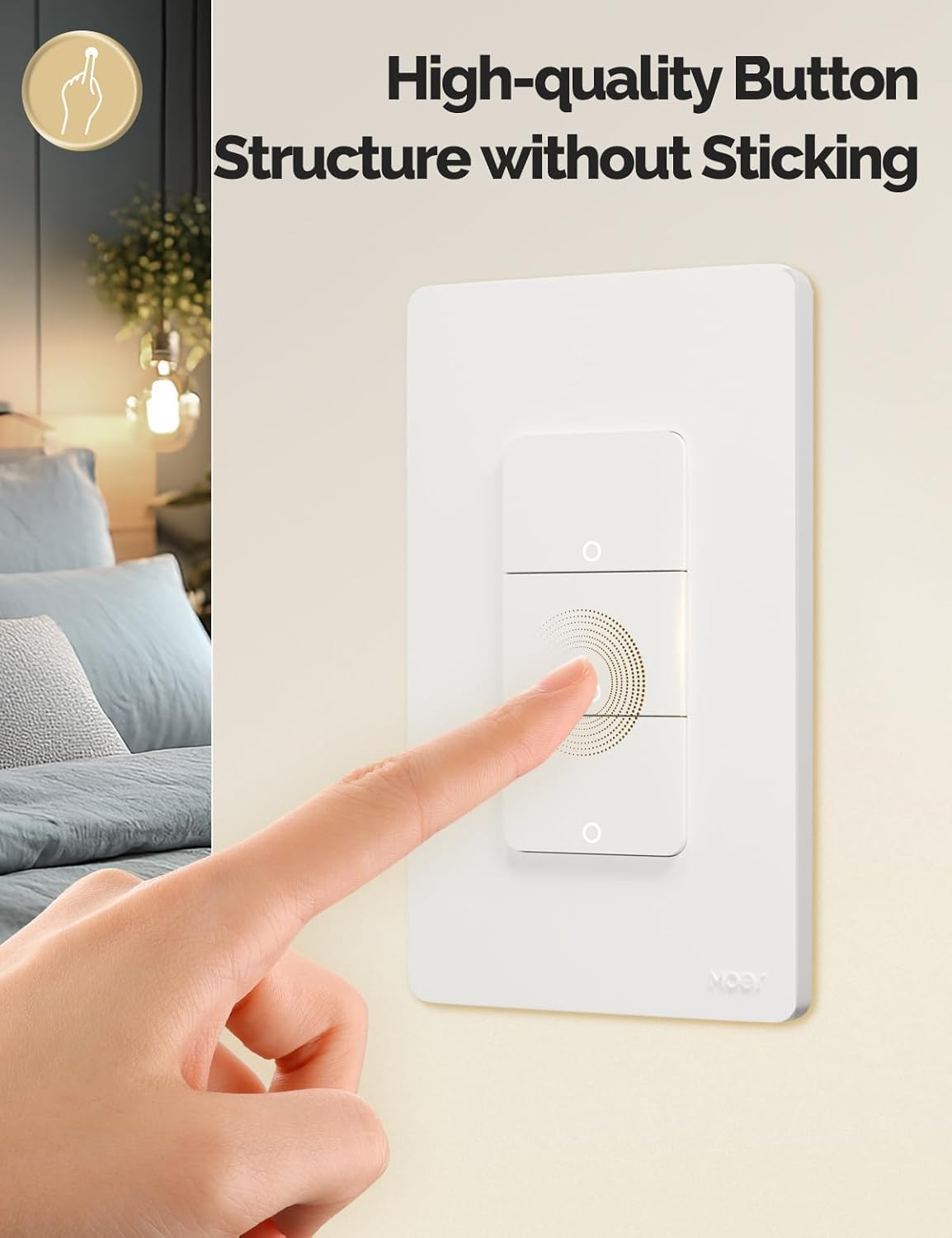
Image 4.1: Close-up of the MOES Smart Switch highlighting its high-quality button design.
4.2. App Control (Remote Control)
Once paired with the app, you can control your lights from anywhere using your smartphone.
- Open the "Smart Life" or "MOES" app.
- Select your smart switch from the device list.
- Tap the on/off icons to control your lights.

Image 4.2: Demonstrates remote control functionality of the smart switch via the mobile application.
4.3. Mana Reo
The switch is compatible with Amazon Alexa and Google Assistant for hands-free control.
- Hononga Pūkete: In your Alexa or Google Home app, link your "Smart Life" or "MOES" account.
- Tirohia nga Pūrere: Ask your voice assistant to discover new devices.
- Tono Reo: Use commands like "Alexa, turn on the living room light" or "Hey Google, turn off the bedroom light."

Image 4.3: Setup showing smart speakers (Alexa, Google Home) interacting with the smart switch for voice control.
4.4. Ngā Mahi Taima me te Whakaritenga
Automate your lighting with customizable timers and schedules through the app.
- Hōtaka: Whakatakotoria he wā motuhake mō ngā rama kia kā, kia tineia rānei i ia rā, i ngā rā kua tohua rānei.
- Whakawhiwhinga: Set a countdown timer for lights to turn off after a set duration.
- Wā Porohita: Configure lights to cycle on and off at regular intervals.
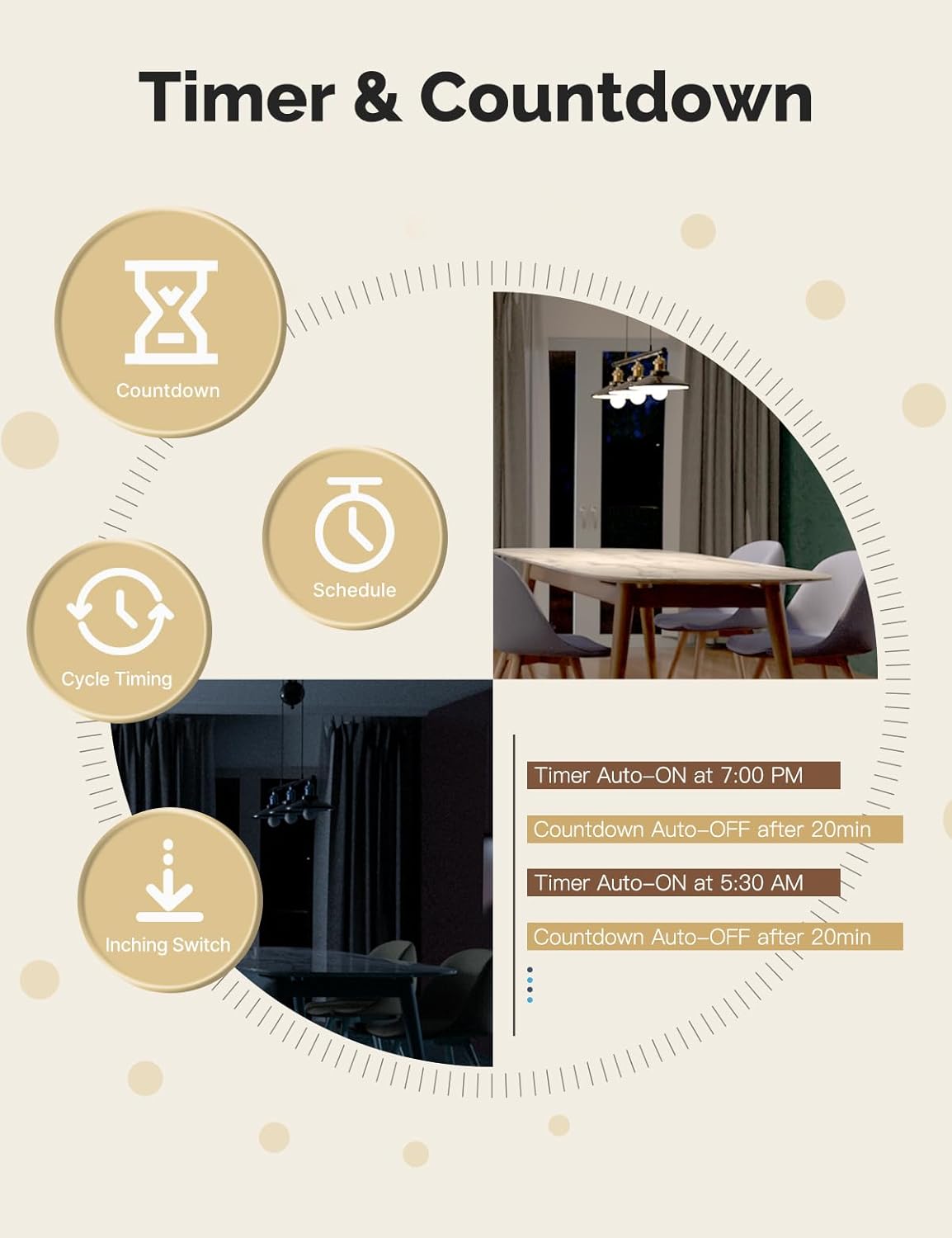
Image 4.4: Visual representation of timer and countdown settings available in the smart home application.
4.5. Indicator Light Mode
The switch features an indicator light that can be configured via the app to show ON/OFF status or switch location in the dark.

Image 4.5: Illustrates different indicator light modes, such as showing ON/OFF status or switch location.
4.6. Relay Status Settings
Configure the switch's behavior after a power outage (Power-off, Power-on, or Restart Memory) through the app settings.

Image 4.6: Screenshot of the app interface for configuring relay status settings after a power interruption.
5. Tiaki
- Clean the switch faceplate with a soft, dry cloth. Avoid abrasive cleaners or solvents.
- Tirohia auau ngā whakahōunga taupānga kia pai ai te mahi me te haumarutanga.
- Ensure your Wi-Fi network is stable and within range of the switch.
6. Te Raru
| Raruraru | Take pea | Rongoā |
|---|---|---|
| Kāore te whakawhiti e aro ki ngā whakahau taupānga/reo. |
|
|
| Lights flicker or do not turn off completely (no-neutral wiring). |
|
|
| Switch gets warm or burns out. |
|
|
| Difficulty with initial installation. |
|
|
7. Whakatakotoranga
| Āhuahira | Taipitopito |
|---|---|
| Waitohu | MOES |
| Tauira | WS-US-L (1-Gang) |
| Aratau Mahi | Aunoa |
| Momo Whakapā | Tuwhera noa |
| Momo Tuhono | Nga Kapeka Tiu |
| tauranga | tīwiri |
| Momo iahiko | 2-ara |
| Momo Whakaeke | Maunga Taiepa |
| Rauemi Whakapā | Te parahi |
| Te maha o nga tuunga | 1 |
| Tikanga Mana | Taupānga, Mamao, Pa, Reo |
| Kawa Ahokore | 2.4GHz Wi-Fi |
| Voltage | 90-240V AC, 50/60Hz |
| Max. Current (per gang) | 8A |
| Total Max. Current | 8A |

Image 7.1: Detailed dimensions and technical specifications of the MOES Smart Light Switch.
8. Pūtāhui me te Tautoko
MOES products are designed for reliability and performance. For warranty information, technical support, or further assistance, please visit the official MOES webpaetukutuku, whakapā atu ranei ki ta raatau ratonga kaihoko.
Ka kitea e koe etahi atu korero me nga rauemi tautoko i te MOES Store on Amazon.


